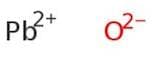
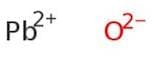
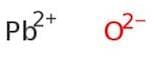
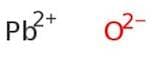
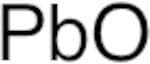
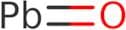
CAS 1317-36-8
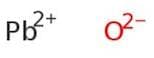
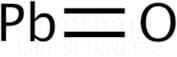
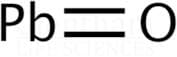
:Lead oxide (PbO)
- Blei(II)-oxid
- Bleimonoxid
- Lead Mono Oxide
- Lead Oxide Regular
- Lead monooxide
- Lead monoxide
- Lead oxide
- Lead oxide (PbO)
- Lead oxide yellow
- Lead oxide yellow granular
- Lead protoxide
- Lead(2+) oxide
- Lead(II) oxide yellow
- Leadoxide
- Leadoxideyellowpowder
- Litharge
- Litharge Granular
- Litharge Irregular
- Litharge Regular
- Litharge S
- Litharge Yellow L 28
- Monoxido De Plomo
- Monoxyde de plomb
- Oxo-Lambda~2~-Plumbane
- Oxyde de plomb(II)
- PbO
- Pigment Yellow 46
- Plumbous Oxygen(-2) Anion
- Plumbous oxide
- Red Lead Oxide
- Rhenogran P60-80
- Yellow Lead Monoxide
- Yellow Lead Oxide Granular
- Yellow lead ocher
- lead (II) oxide, litharge, lead oxide
- C.I. Pigment Yellow 46
- Lead(II)oxide
- C.I. 77577
- See more synonyms
Lead(II) oxide, 99.9%
CAS:It is employed mostly in lead-based industrial glass and industrial ceramics, including computer components. Lead monoxide is used as an intermediate/precursor in the manufacture of several products, for example water proof cements, lubricants, lubricating oils, inorganic pigments, lead soaps, petrFormula:OPbPurity:99.9%Color and Shape:Pale yellow to yellow or pale orange, Powder or crystalline powder or crystalsMolecular weight:223.20Lead(II) oxide, Puratronic™, 99.999% (metals basis)
CAS:Used in producing iridescent colors on brass and bronze, coloring sulfur-containing substances and used as pigment for rubber. It is also used in oil refining, varnishes, paints, enamels and in assays for precious metal ores. This Thermo Scientific Chemicals brand product was originally part of theFormula:OPbPurity:99.999%Molecular weight:223.20Lead(II) oxide, 99.99% (metals basis)
CAS:Lead(II) oxide is employed mostly in lead-based industrial glass and industrial ceramics, including computer components. It is used as an intermediate/precursor in the manufacture of several products, for example water proof cements, lubricants, lubricating oils, inorganic pigments, lead soaps, petFormula:OPbPurity:99.99%Molecular weight:223.20Lead(II) oxide, low silver
CAS:Lead(II) oxide is used in storage batteries, ceramic cements and fluxes, pottery and glazes, in chromium pigments, in oil refining, in paints, and in the assay of precious metal ores. This Thermo Scientific Chemicals brand product was originally part of the Alfa Aesar product portfolio. Some documeFormula:OPbColor and Shape:Powder, Yellow to yellow-orange to redMolecular weight:223.20Lead(II) oxide, Puratronic™, 99.9995% (metals basis)
CAS:It is used in the manufacture of glass, ceramics and computer components. Addition of lead oxide increases the refractive index, electrical resistivity, Curie temperature, and the ability of the glass to absorb X-rays. It is also added to decrease the viscosity of glass. It is employed in the vulFormula:OPbPurity:99.9995%Molecular weight:223.20Lead(II) oxide (99.999+%-Pb) PURATREM
CAS:Lead(II) oxide (99.999+%-Pb) PURATREM
Formula:PbOPurity:(99.999+%-Pb)Color and Shape:yellow pwdr.Molecular weight:223.19Lead(II) oxide (Litharge), 99+%
CAS:Lead(II) oxide (Litharge), 99+%
Formula:PbOPurity:99+%Color and Shape:yellow pwdr.Molecular weight:223.19Lead(II) Oxide
CAS:Formula:PbOPurity:>98.0%(T)Color and Shape:Light yellow to Yellow to Orange powder to crystalMolecular weight:223.20Lead(II) oxide, 99%
CAS:Formula:PbOPurity:≥ 99.0%Color and Shape:Yellow or yellow-orange powderMolecular weight:223.19Lead(II) Oxide
CAS:Applications Lead(II) Oxide is used as the starting material in the synthesis of Dibasic Lead Phthalate Hydrate (D417070); a compound that is used in vinyl wire insulation as a flame retardant.
Not a dangerous good if item is equal to or less than 1g/ml and there is less than 100g/ml in the package
References Grossman, R. et al.: J. Vinyl Addt. Tech., 9, 65 (2003); Grossman, R. et al.: Vinyl Addt. Tech., 6, 138 (2000)Formula:PbOColor and Shape:NeatMolecular weight:223.97157Lead (II) Oxide (Lead Monoxide, Litharge) ACS, 99%
CAS:Formula:PbOPurity:min.99%Color and Shape:Yellow to orange, PowderMolecular weight:223.20Lead (II) Oxide (Lead Monoxide, Litharge) pure, 99%
CAS:Formula:PbOPurity:min.99%Color and Shape:Yellow to orange, PowderMolecular weight:223.20Lead(II) oxide
CAS:Lead(II) oxide is a chemical compound that has been shown to have biological properties. It acts as a surface glycoprotein and has been shown to be stable in various environments. Lead(II) oxide is also chemically inert, with redox potentials that are higher than those of many other compounds. When lead(II) oxide is heated, it can react with water to form lead hydroxide and hydrogen gas. Studies show that lead(II) oxide is toxic when inhaled or ingested. Lead(II) oxide has been shown to be effective in wastewater treatment due to its high solubility and low toxicity to microorganisms. Lead(II) oxide is also used in the production of thermometers, which require a material that does not expand or contract significantly with changes in temperature. Lead(II) oxide has been shown to have bioavailability in vivo and transfer reactions have been observed between this compound and other metals such as copper and zinc.
Formula:PbOPurity:Min. 95%Color and Shape:PowderMolecular weight:223.2 g/molRef: 3D-FL145356
Discontinued product