CAS 1317-80-2
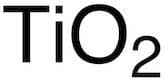
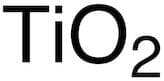
:Rutile (TiO2)
Description:
Rutile, with the chemical formula TiO2 and CAS number 1317-80-2, is a naturally occurring mineral and one of the primary forms of titanium dioxide. It is characterized by its high refractive index and strong UV light absorption, making it an important pigment in various applications, including paints, coatings, and plastics. Rutile is typically found in a tetragonal crystal structure, exhibiting a range of colors from reddish-brown to black, depending on impurities. It is insoluble in water and most organic solvents, but it can react with strong acids and bases. Rutile is also known for its high thermal stability and resistance to chemical corrosion, which contributes to its use in high-temperature applications. Additionally, it is a semiconductor with potential applications in photocatalysis and solar energy conversion. Due to its abundance and favorable properties, rutile is extensively mined and processed for industrial use, particularly in the production of titanium metal and titanium dioxide pigments.
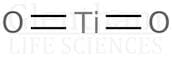
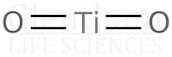
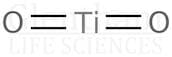
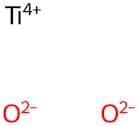
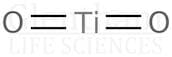
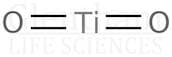
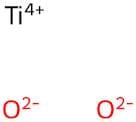
Formula:O2Ti
InChI:InChI=1S/2O.Ti
InChI key:InChIKey=GWEVSGVZZGPLCZ-UHFFFAOYSA-N
SMILES:[Ti](=O)=O
Synonyms:- A 20-13
- Austiox R-CR
- B 2400
- Ba 0101
- Ba 101
- Baiyuying HTR 668
- CR Super 70
- CW-Ti 001
- Cr 510
- Cr 513
- Cr 515
- Ect 200
- GA 120 (titania)
- Ga 120
- HTTi 04-01
- Lomon R 996
- Longmang 996
- Mbr 9668
- Nr 950
- Nt-Gr 100
- Nt-Gr 150
- Pf 740
- R 20-104
- R 216
- R 2196
- R 237
- R 237 (titania)
- R 258
- R 5566
- R 628
- R 698
- R 699
- R 838
- R 930-4
- R 975
- R-Tc 30
- Rcl 595
- Rm 301Lp
- Rsc 5
- Rutil (TiO2)
- Rutile
- Rutile (TiO<sub>2</sub>)
- Rx 236
- Sagenite
- Sr 237
- Synthetic rutile (TiO2)
- T 595
- Tiona 696
- Tiona RCL 595
- Titania 595
- Titanium Dioxide (Rutile)
- Titanium oxide
- Titanox 3020
- Tr 248
- Tr 700
- Unitane OR
- Vk-T 06H
- ZR 110 (titania)
- Zr 110
- rutilo (TiO2)
- β-Rutile
- pigment white
- Titania
- titanium white
- Titanium Dioxide Anatase
- Titanium(Ⅳ)oxide
- Titanium dioxide,anatase
- Titanium(IV)oxide
- Tilac D
- Anatase,oxid titanium
- rutile titanium dioxide
- Titanium Dioxide food grade
- Titanium dioxide
- TiLox-Black
- Pigment Black 35
- C.I. 77891
- Rutile (TiO2)
- dioxotitanium
- Titanium (IV) dioxide
- C.I. Pigment White 6
- See more synonyms
Sort by
Purity (%)
0
100
|
0
|
50
|
90
|
95
|
100
Found 20 products.
Titanium(IV) oxide, rutile, 99.5% min (metals basis)
CAS:Titanium dioxide is used in paints, plastics, paper, and foods. It is used as a UV-resistant material. It shows useful applications in earth sciences. It is also useful in quantitative provenance studies. It is also useful for the photocatalytic applications. It is also useful in high temperature suFormula:O2TiPurity:99.5%Molecular weight:79.9Titanium(IV) oxide, rutile, 99.99% (metals basis)
CAS:Titanium(IV) oxide is used in paints, plastics, paper, and foods. It is used as a UV-resistant material. It shows useful applications in earth sciences. It is also useful in quantitative provenance studies. It is also useful for the photocatalytic applications. It is also useful in high temperatureFormula:TiO2Purity:99.99%Molecular weight:79.9Titanium(IV) oxide, rutile, 99.9% (metals basis)
CAS:Titanium dioxide is used in paints, plastics, paper, and foods. It is used as a UV-resistant material. It shows useful applications in earth sciences. It is also useful in quantitative provenance studies. It is also useful for the photocatalytic applications. It is also useful in high temperature suFormula:TiO2Purity:99.9%Molecular weight:79.9Titanium(IV) oxide, rutile, 99.8% (metals basis)
CAS:Titanium(IV) oxide is used in paints, plastics, paper, and foods. It is used as a UV-resistant material. It shows useful applications in earth sciences. It is also useful in quantitative provenance studies. It is also useful for the photocatalytic applications. It is also useful in high temperatureFormula:TiO2minrutilephasePurity:99.8%Molecular weight:79.9Titanium(IV) oxide, powder <100nm particle size
CAS:Titanium(IV) oxide, powder <100nm particle sizeFormula:·2O·TiPurity:99.5%Color and Shape:White PowderMolecular weight:79.87g/molTitanium(IV) oxide, rutile
CAS:Titanium(IV) oxide, rutilePurity:99.8%,100nm(Before wrapping),golden red,OleophilicMolecular weight:79.866g/molTitanium(IV) Oxide, Rutile (99.9%, trace metals basis)
CAS:Formula:TiO2Purity:>99.99%Color and Shape:White to Almost white powder to crystalMolecular weight:79.87Titanium(IV) Oxide, Rutile (99.99%, trace metals basis)
CAS:Formula:TiO2Purity:>99.99%Color and Shape:White to Almost white powder to crystalMolecular weight:79.87Titanium(IV) oxide
CAS:Titanium(IV) oxideFormula:·2O·TiPurity:95%Color and Shape: off white solidMolecular weight:79.8658g/molTitanium oxide Nanopowder, rutile, 99% [APS 200nm, spherical]
CAS:Formula:TiO2Purity:≥ 99.0%Color and Shape:White powderMolecular weight:79.87Titanium oxide Nanopowder, 10 - 30 nm, rutile, 99.5%
CAS:Formula:TiO2Purity:≥ 99.5%Color and Shape:White powderMolecular weight:79.87Titanium(IV) oxide
CAS:Titanium(IV) oxidePurity:99.99%Color and Shape:White SolidMolecular weight:79.8658g/molTitanium oxide Nanopowder, rutile, coated with SiO2, 99 %
CAS:Purity:≥ 99.0%Color and Shape:White powderTitanium(IV) oxide, 99.998%
CAS:Formula:TiO2Purity:≥ 99.998%Color and Shape:White to off-white powderMolecular weight:79.90Titanium (IV) oxide - Rutile
CAS:Rutile is the most common form of titanium oxide and is a photocatalyst that can react with water vapor to produce hydrogen gas. Rutile has been shown to be toxicologically safe and has been used in analytical methods for the detection of sodium salts, such as the determination of sodium in seawater. Rutile can also be used for wastewater treatment, where it functions as a catalyst for chemical reactions that remove organic pollutants from water.Formula:TiO2Purity:Min. 95%Color and Shape:White Clear LiquidMolecular weight:79.87 g/mol











![Titanium oxide Nanopowder, rutile, 99% [APS 200nm, spherical]](/_next/image/?url=https%3A%2Fstatic.cymitquimica.com%2Fproducts%2F7W%2Fthumb%2FGX4909.jpg&w=3840&q=75)