CAS 1318-93-0
:Montmorillonite
- 1090B
- 1095B
- 638Mc-P8Cm25
- AMS
- Aquaset
- Arcillite
- Bedelix
- Ben-A-Gel
- Bentolite
- Bentopharm
- Brock
- Ca-Cloisite
- Deriton
- Enobent
- Envirobent
- K-Catalyst
- KSF
- MMT
- Mac-gel
- Maghnite
- Metaloid
- Microtec
- Mikawa
- Montmorillonit
- Montmorillonita
- Na-Cloisite
- Naima
- Neokunibond
- PGV
- PGW
- Petro-Free
- Polargel
- S-Mmt
- S-Pgw
- Smj-N
- Turface
- Tz-Mmt
- Walkerde
- Dioctahedral Diosmectite
- Montmorillonite ((Al1.33-1.67Mg0.33-0.67)(Ca0-1Na0-1)0.33Si4(OH)2O10.xH2O)
- Montmorillonite
- Gelwhite GP
- MONTMORILLONIT KSF/O
- NANOMETER ACTIVE MONTMORILLONITE 30-80 NM
- MONTMORILLONIT K 30
- BENTONITE-SF
- SODIUM MONTMORILLONITE
- Keratin type I cytoskeletal 10
- CATALYST KP 10
- K-10 BENTONITE CLAY
- Montmorillonite K-10
- montmorillonite, naturally occurring mineral
- Mortmorillonite.
- BENTONITE CLAY
- EGYPTIANMONTMORILLONITE
- MONTMORILLONITE K 10
- Montmorillonite K-10 Clay
- Montmorillonite,K-Catalyst
- MONTMORILLONITE K 5
- MONTMORILLONITE KSF, POWDER
- MONTMORILLONITE KSF
- montmoillonite-typeclay
- MONTMORILLONIT K 5
- DIOCTAHEDRAL SMECTITE
- MONTMORILLONITE UNTREATED, CATALYST
- MONTMORILLONITE K 10, POWDER
- MontMorillonite KSF 1KG
- Aluminum hydrosilicate, K-Catalyst
- Diosectite
- CATALYST KSF/O
- Anti-Keratin 10 antibody produced in rabbit
- MontMorillonite K 10 surface area 220-270 M2/g
- MONTMORILLONITE K 20
- ALUMINIUM SILICATE
- Bentonite clay K-10
- MONTMORILLONIT K 20
- MONTMORILLONITE KSF/O
- MONTMORILLONITE K 30
- MONTMORILLONIT KP 10
- MONTMORILLONITE KP 10
- MontMorillonite KSF surface area 20-40 M2/g
- AMS (mineral)
- CATALYST K 5
- Montmorillonite KSF,K-Catalyst
- See more synonyms
Montmorillonite K10
CAS:Used for support for catalysts, preparation of clay nanopaper composites of nacre-like structure, conversion of triose sugars with alcohols to alkyl lactates and Deprotection of ketone dimethylhydrazones. This Thermo Scientific Chemicals brand product was originally part of the Alfa Aesar product po
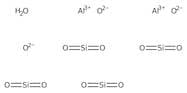
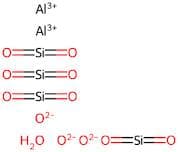
Formula:Al2H2O12Si4Color and Shape:White to cream or pale brown or pale grey, Powder or granulesMolecular weight:360.31Sodium montmorillonite
CAS:Sodium montmorillonite (Bentolite) can catalyze reactions of the 5'-phosphorimidazolide of adenosine used as a model generated RNA type oligomers.Formula:Al1·67Mg0(Ca0Na0·33Si4(OH)2O10·xH2OPurity:98%Color and Shape:Powder SolidMolecular weight:282.21Sodium montmorillonite clay
CAS:Purity:97%Color and Shape:Solid, White powderMolecular weight:359.825408884Montmorillonite K 10
CAS:Controlled ProductApplications Montmorillonite K 10 is used in the catalytic chemical process, including chemical cracking.
References Kaur, J. et al.: J. Chem. Pharm. Res., 4, 991 (2012);Formula:Al2H2O12Si4Color and Shape:NeatMolecular weight:360.31Dioctahedral smectite
CAS:Dioctahedral smectite is a type of clay that has a layered structure. It is used in wastewater treatment and has been shown to have inhibitory properties against many organisms, including bacteria, viruses, and insects. It can be used as a polymer additive to increase the resistance of chitosan polymers to water vapor and thermal expansion. The use of this clay as an additive may also reduce the cost of production, since it is more economical than other types of clays. The x-ray diffraction data for this clay shows that it contains potassium dichromate crystals and potassium ions. Dioctahedral smectite has been shown to have cardiac effects on laboratory animals, which may be due to its high resistance to water vapor and thermal expansion. This clay can also be analyzed using an analytical method such as x-ray diffraction or surface methodology techniques.
Formula:Al2O9Si3Color and Shape:White PowderMolecular weight:282.21 g/molRef: 3D-FD29516
Discontinued product