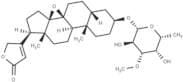
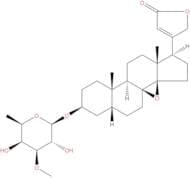
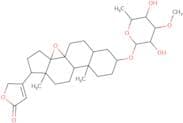
CAS 1318158-89-2
:Cardenolide B-1
Description:
Cardenolide B-1, with the CAS number 1318158-89-2, is a member of the cardenolide family, which are naturally occurring compounds known for their potent biological activities, particularly in the context of cardiac function. These compounds typically exhibit a steroid structure characterized by a lactone ring and a sugar moiety, which contribute to their pharmacological properties. Cardenolides are primarily derived from plants, particularly those in the Apocynaceae and Asclepiadaceae families, and are recognized for their ability to inhibit the Na+/K+ ATPase enzyme, leading to increased intracellular calcium levels and enhanced cardiac contractility. This mechanism underlies their use in treating heart conditions, such as congestive heart failure and certain arrhythmias. Additionally, cardenolides can exhibit cytotoxic effects against various cancer cell lines, making them of interest in cancer research. However, their therapeutic use is limited by potential toxicity and side effects, necessitating careful dosage and monitoring. Overall, Cardenolide B-1 represents a significant compound within the broader context of cardiac glycosides and their applications in medicine.
Formula:C30H44O8
Synonyms:- (3beta,5beta)-3-[(6-deoxy-3-O-methyl-beta-D-galactopyranosyl)oxy]-8,14-epoxycard-20(22)-enolide
- Cardenolide B-1
- Card-20(22)-enolide, 3-[(6-deoxy-3-O-methyl-β-D-galactopyranosyl)oxy]-8,14-epoxy-, (3β,5β)-
Sort by
Purity (%)
0
100
|
0
|
50
|
90
|
95
|
100
Found 3 products.
Cardenolide B-1
CAS:Cardenolide B-1 is a natural product of Nerium, Apocynaceae.Formula:C30H44O8Purity:98%Color and Shape:SolidMolecular weight:532.674Cardenolide B-1
CAS:Cardenolide B-1 is a naturally occurring steroid found in certain plants, which is usually extracted from species in the Apocynaceae family. Its mode of action involves the inhibition of the Na+/K+-ATPase pump, leading to increased intracellular calcium concentration in cardiac cells. This increase enhances cardiac contractility, a principle mechanism underpinning the therapeutic applications of digitalis and related cardiac glycosides.Formula:C30H44O8Purity:Min. 95%Molecular weight:532.7 g/mol