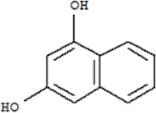
CAS 132-86-5
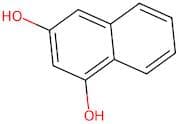
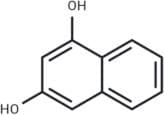
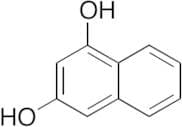
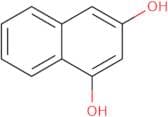
:1,3-Dihydroxynaphthalene
Description:
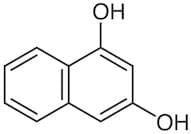
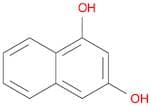
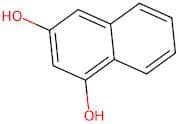
1,3-Dihydroxynaphthalene, also known as 1,3-naphthalenediol, is an organic compound characterized by the presence of two hydroxyl (-OH) groups attached to a naphthalene ring at the 1 and 3 positions. This compound appears as a white to light yellow crystalline solid and is soluble in alcohol and ether, but less soluble in water. It exhibits properties typical of phenolic compounds, including the ability to form hydrogen bonds and participate in various chemical reactions, such as oxidation and substitution. 1,3-Dihydroxynaphthalene is often used in organic synthesis and as an intermediate in the production of dyes, pharmaceuticals, and other chemical products. Additionally, it has applications in research, particularly in studies related to its antioxidant properties and potential biological activities. Safety data indicates that it should be handled with care, as it may cause irritation upon contact with skin or eyes. Proper safety measures, including the use of personal protective equipment, are recommended when working with this substance.
Formula:C10H8O2
InChI:InChI=1S/C10H8O2/c11-8-5-7-3-1-2-4-9(7)10(12)6-8/h1-6,11-12H
InChI key:InChIKey=XOOMNEFVDUTJPP-UHFFFAOYSA-N
SMILES:OC=1C2=C(C=C(O)C1)C=CC=C2
Synonyms:- 1,3-Naphthalenediol
- NSC 115890
- Naphthalene-1,3-Diol
- Naphtharesorcinol
- Naphthoresorcinol
- Naphtoresorcine
- 1,3-Dihydroxynaphthalene
Sort by
Purity (%)
0
100
|
0
|
50
|
90
|
95
|
100
Found 11 products.
1,3-Dihydroxynaphthalene
CAS:Formula:C10H8O2Purity:>98.0%(GC)(T)Color and Shape:White to Gray to Brown powder to crystalMolecular weight:160.171,3-Dihydroxynaphthalene, 98%
CAS:It is used in the naphthoresorcinol test for uronic acids of Tollens and Rorive, a blue color can be extracted with ethanol after heating of uronic acids with naphthoresorcinol in hydrochloric acid. It is also employed as a reagent for various medical tests. It can also be used as a spot test reagenFormula:C10H8O2Purity:98%Color and Shape:Cream to brown, PowderMolecular weight:160.171,3-Dihydroxynaphthalene
CAS:1,3-Dihydroxynaphthalene
Formula:C10H8O2Purity:98%Color and Shape: light orange to brown powderMolecular weight:160.16932g/mol1,3-Dihydroxynaphthalene
CAS:Formula:C10H8O2Purity:≥ 98.0%Color and Shape:Off-white to grey, orange or brown crystalline powderMolecular weight:160.17Naphthoresorcinol, 10mM (in DMSO)
CAS:Naphthoresorcinol, 10mM (in DMSO)Purity:≥98%Molecular weight:160.17g/molNaphthoresorcinol
CAS:Naphthoresorcinol (1,3-Dihydroxynaphthalene) is a fluorescent dye (λex=330 nm, λem=380 nm).Formula:C10H8O2Purity:99.56%Color and Shape:White To Tan CrystallineMolecular weight:160.171,3-Naphthalenediol
CAS:Applications 1,3-Naphthalenediol is a derivative of naphthalene (N345600) and may have antibacterial activity against oral bacteria.Dyes and metabolites.
References Song, H-Y., et al.: J Korean Soc Appl Biol Chem, 55, 183-187 (2012)Formula:C10H8O2Color and Shape:NeatMolecular weight:160.171,3-Dihydroxynaphthalene
CAS:1,3-Dihydroxynaphthalene is an organic compound that has been shown to inhibit HIV infection in vitro. The optimum concentration of 1,3-dihydroxynaphthalene for inhibition of HIV infection is 0.5% (w/v). This compound can be synthesized by the reaction of epoxy and a sulfonamide drug. In addition, 1,3-dihydroxynaphthalene has been shown to have anti-inflammatory properties and can be used as a potential treatment for metabolic disorders such as diabetes mellitus.Formula:C10H8O2Purity:Min. 95%Color and Shape:PowderMolecular weight:160.17 g/mol1,3-Dihydroxynaphthalene (Naphthoresorcinol) extrapure AR, 99%
CAS:Formula:C10H8O2Purity:min. 99%Color and Shape:White to gray to brown, Powder to crystalMolecular weight:160.17