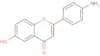
CAS 132018-32-7
:Aminogenistein
Description:
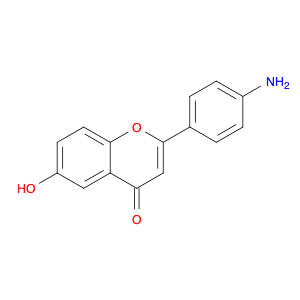
Aminogenistein, with the CAS number 132018-32-7, is a synthetic compound that belongs to the class of isoflavones, which are polyphenolic compounds primarily found in plants. It is structurally related to genistein, a well-known isoflavone with various biological activities. Aminogenistein is characterized by its potential antioxidant properties, which may contribute to its role in promoting health and preventing oxidative stress-related diseases. Additionally, it has been studied for its possible effects on hormone regulation, particularly in relation to estrogen, making it of interest in research on hormone-dependent conditions. The compound may exhibit various biological activities, including anti-inflammatory and anticancer effects, although further studies are necessary to fully elucidate its mechanisms of action and therapeutic potential. As with many isoflavones, its bioavailability and metabolism in the human body can influence its efficacy and safety profile. Overall, aminogenistein represents a compound of interest in both nutritional and pharmaceutical research, particularly in the context of plant-derived bioactive substances.
Formula:C15H11NO3
InChI:InChI=1/C15H11NO3/c16-10-3-1-9(2-4-10)15-8-13(18)12-7-11(17)5-6-14(12)19-15/h1-8,17H,16H2
SMILES:c1cc(ccc1c1cc(=O)c2cc(ccc2o1)O)N
Synonyms:- 4H-1-Benzopyran-4-one,2-(4-aminophenyl)-6-hydroxy-(9CI)
- 2-(4-aminophenyl)-6-hydroxy-4H-chromen-4-one
Sort by
Purity (%)
0
100
|
0
|
50
|
90
|
95
|
100
Found 4 products.
4H-1-Benzopyran-4-one,2-(4-aminophenyl)-6-hydroxy-
CAS:Formula:C15H11NO3Color and Shape:SolidMolecular weight:253.25274'-Amino-6-hydroxyflavone
CAS:4'-Amino-6-hydroxyflavoneFormula:C15H11NO3Purity:≥95%Color and Shape: dark yellow solidMolecular weight:253.25g/molAminogenistein
CAS:Aminogenistein inhibits protein-tyrosine kinase activity of p56lck.Formula:C15H11NO3Color and Shape:SolidMolecular weight:253.25Aminogenistein
CAS:Aminogenistein is a molecule that has been shown to inhibit the growth of cancer cells. It has been shown to have a reactive functional group, which can be used as a diagnostic and prognostic tool for kidney disease and cancers. Aminogenistein has also been shown to inhibit epidermal growth factor (EGF) in rat kidneys, which may be due to its ability to bind EGF with high affinity. In addition, it has been shown to inhibit cellular physiology by blocking the transport properties of proximal tubules in rat kidneys. Aminogenistein is thought to induce apoptosis through the death protein pathway in cancer cells, but not normal cells.Formula:C15H11NO3Purity:Min. 95%Molecular weight:253.25 g/mol