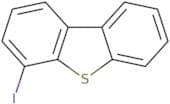
CAS 132034-89-0
:4-Iododibenzothiophene
Description:
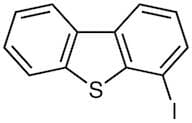
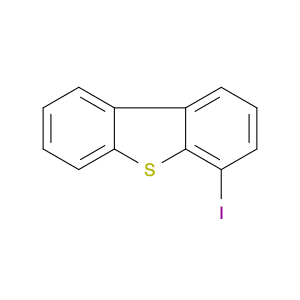
4-Iododibenzothiophene is an organic compound characterized by the presence of both iodine and a dibenzothiophene structure, which consists of a sulfur atom integrated into a fused aromatic ring system. This compound typically exhibits a high degree of stability due to the aromatic nature of its structure, making it relatively resistant to oxidation and other chemical reactions. The iodine substituent can influence its electronic properties, potentially enhancing its reactivity in certain chemical reactions, such as nucleophilic substitutions or coupling reactions. Additionally, the presence of sulfur in the dibenzothiophene framework may impart unique properties, such as increased solubility in organic solvents and potential applications in materials science, particularly in organic electronics and photonic devices. The compound's molecular structure allows for various functionalization possibilities, making it a valuable intermediate in synthetic organic chemistry. Overall, 4-Iododibenzothiophene is of interest in both academic research and industrial applications due to its distinctive chemical properties and potential utility in advanced materials.
Formula:C12H7IS
InChI:InChI=1S/C12H7IS/c13-10-6-3-5-9-8-4-1-2-7-11(8)14-12(9)10/h1-7H
SMILES:c1ccc2c(c1)c1cccc(c1s2)I
Synonyms:- 4-Iododibenzo[b,d]thiophene
- Dibenzo[B,D]Thiophene, 4-Iodo-
Sort by
Purity (%)
0
100
|
0
|
50
|
90
|
95
|
100
Found 5 products.
4-Iododibenzothiophene
CAS:Formula:C12H7ISPurity:>98.0%(GC)Color and Shape:White to Orange to Green powder to crystalMolecular weight:310.15Dibenzothiophene, 4-iodo-
CAS:Formula:C12H7ISPurity:98%Color and Shape:SolidMolecular weight:310.15344-Iododibenzothiophene
CAS:4-Iododibenzothiophene is a pyrazole compound that has been shown to be an efficient cross-coupling agent for the synthesis of amides. It is a homologous compound that can be synthesized from terminal alkynes and halides. 4-Iododibenzothiophene has been used in the synthesis of heterocyclic compounds with macrocyclic structures. This chemical also has physicochemical properties that make it an efficient cross-coupling reaction partner. It also participates in response pathways, such as homologous recombination, which leads to higher efficiencies in DNA replication, repair, and transcription.Formula:C12H7ISPurity:Min. 95%Color and Shape:PowderMolecular weight:310.15 g/mol


![4-Iododibenzo[b,d]thiophene](/_next/image/?url=https%3A%2Fstatic.cymitquimica.com%2Fproducts%2F54%2Fthumb%2FOR74707.jpg&w=3840&q=75)

![4-Iododibenzo[b,d]thiophene](/_next/image/?url=https%3A%2Fstatic.cymitquimica.com%2Fproducts%2F10%2Fthumb%2FF334811.jpg&w=3840&q=75)