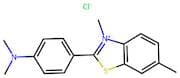
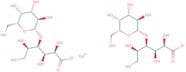
CAS 1326-12-1
:Thioflavin S
Description:
Thioflavin S is a synthetic organic compound commonly used as a fluorescent dye, particularly in biological and biochemical applications. It is characterized by its ability to bind to amyloid fibrils, making it a valuable tool in the study of amyloid-related diseases, such as Alzheimer's. The compound exhibits strong fluorescence when bound to these fibrils, allowing for visualization under fluorescence microscopy. Thioflavin S has a distinct yellow-green color in solution and is soluble in water and various organic solvents. Its molecular structure includes a thiazole ring, which contributes to its fluorescent properties. The dye is often utilized in histological staining protocols to detect amyloid deposits in tissue samples. Additionally, Thioflavin S is known for its relatively low toxicity, making it suitable for use in live-cell imaging studies. Overall, its unique properties and applications in research make Thioflavin S an important compound in the fields of biochemistry and medical research.
Formula:Unspecified
Synonyms:- Amanil Brilliant Yellow S
- Atlantic Brilliant Flavine S
- Chloramine Brilliant Flavine S
- Chromine G
- Diazol Brilliant Yellow S
- Direct Brilliant Flavine S
- Direct Brilliant Yellow 3GN-CF
- Direct Brilliant Yellow 5GX
- Direct Flavine S
- Direct Pure Yellow TS
- Eljon Ex Yellow Green Toner
- Erie Flavine S
- Methylated sulfonated primuline base
- Phenamine Brilliant Yellow 3G
- Thioflavine S
- thioflavine S practical grade
- C.I. 49010
- See more synonyms
Sort by
Purity (%)
0
100
|
0
|
50
|
90
|
95
|
100
Found 5 products.
Thioflavine S
CAS:Thioflavine S (Direct Yellow 7) is a fluorescent histochemical marker.Purity:98%Color and Shape:SolidThioflavine S (Technical Grade)
CAS:Controlled ProductApplications Thioflavine S is a reagent also known as Direct Yellow 7; potentially useful as an amyloid plaque stain. Dyes and metabolites.
Formula:C17H19N2S·ClColor and Shape:Dark Red To Dark BrownMolecular weight:318.9Thioflavine S
CAS:Thioflavine S is a fluorescent dye that is used to detect the synthesis of amyloid protein in cell culture. It has been shown to inhibit the replication of HIV-1, and is also used as a marker for alopecia areata. Thioflavine S inhibits the activity of proteases and may be useful in the treatment of hepatitis. This compound has been shown to inhibit neuronal death induced by amyloid β protein and to promote neuronal survival in rat hippocampal cells. Thioflavine S was found to have antiviral activity against herpes simplex virus type 1 (HSV-1) and cytomegalovirus (CMV).
Purity:Min. 95%