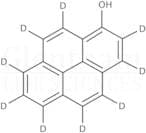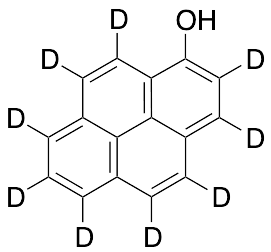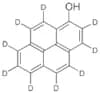
CAS 132603-37-3
:1-HYDROXYPYRENE-D9
Description:
1-Hydroxypyrene-D9 is a deuterated derivative of 1-hydroxypyrene, which is a polycyclic aromatic hydrocarbon (PAH) metabolite. The presence of deuterium atoms in its structure allows for enhanced analytical detection methods, such as mass spectrometry, making it useful in environmental and biological studies. This compound is primarily studied for its role as a biomarker for exposure to PAHs, which are known to arise from incomplete combustion of organic materials. 1-Hydroxypyrene itself is a product of the metabolic breakdown of pyrene, a common PAH found in coal tar and cigarette smoke. The characteristics of 1-hydroxypyrene-D9 include its solubility in organic solvents, stability under standard laboratory conditions, and its ability to undergo various chemical reactions typical of hydroxylated aromatic compounds. Its analysis can provide insights into the extent of PAH exposure in humans and the environment, contributing to studies on toxicology and public health.
Formula:C16HD9O
Synonyms:- 1-Pyrenol-D9
Sort by
Purity (%)
0
100
|
0
|
50
|
90
|
95
|
100
Found 6 products.
1-Hydroxypyrene-d9
CAS:Formula:C16HD9OPurity:≥ 98.0%Color and Shape:White to beige solidMolecular weight:227.301-Hydroxypyrene-d9
CAS:Purity:98 atom % DColor and Shape:White To Yellow SolidMolecular weight:227.311-Hydroxypyrene-d9
CAS:Controlled ProductApplications 1-Hydroxypyrene-d9 is found in humane urine after exposure to coal tar and a coal derived product.
References Jongeneelen, F.J., et al.: Int. Arch. Occup. Environ. Health, 57, 47 (1985)Formula:C162H9HOColor and Shape:White To BeigeMolecular weight:227.311-Hydroxypyrene-d9
CAS:Controlled Product1-Hydroxypyrene-d9 is a genotoxic aromatic hydrocarbon that can be found in the environment as a byproduct of combustion and cigarette smoke. It has been shown to cause DNA damage through oxidative stress and genotoxicity. This compound can be used for the detection of naphthalene in bile samples and urine samples. 1-Hydroxypyrene-d9 also has potential use in cancer research as it can be used to detect oxidative damage to DNA in cells. It has been shown to have synchronous fluorescence with DNA, which makes it useful for quantification of DNA. 1-Hydroxypyrene-d9 is analysed using analytical methods such as fluorescence spectrometry, synchronous fluorescence, and sample preparation.Formula:C16HD9OPurity:Min. 95%Color and Shape:PowderMolecular weight:227.3 g/mol