CAS 133256-51-6
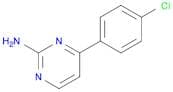
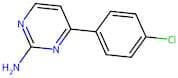
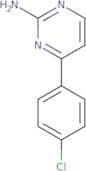
:4-(4-CHLOROPHENYL)PYRIMIDIN-2-AMINE
Description:
4-(4-Chlorophenyl)pyrimidin-2-amine, with the CAS number 133256-51-6, is an organic compound characterized by its pyrimidine core, which is a six-membered heterocyclic ring containing two nitrogen atoms at positions 1 and 3. This compound features a 4-chlorophenyl group attached to the pyrimidine ring, contributing to its chemical properties and potential biological activity. It is typically a solid at room temperature and may exhibit moderate solubility in organic solvents. The presence of the amino group at the 2-position of the pyrimidine ring suggests potential for hydrogen bonding and reactivity, making it of interest in medicinal chemistry, particularly in the development of pharmaceuticals. The chlorophenyl substituent can influence the compound's lipophilicity and biological interactions. Overall, 4-(4-chlorophenyl)pyrimidin-2-amine is a compound of interest for research in various fields, including drug discovery and material science, due to its structural features and potential applications.
Formula:C10H8ClN3
Synonyms:- Rarechem Al Fi 0016
- 2-Amino-4-(4-Chlorophenyl)Pyrimidine
- Buttpark 16\04-20
Sort by
Purity (%)
0
100
|
0
|
50
|
90
|
95
|
100
Found 4 products.
2-Pyrimidinamine, 4-(4-chlorophenyl)-
CAS:Formula:C10H8ClN3Purity:95%Color and Shape:SolidMolecular weight:205.64364-(4-Chlorophenyl)pyrimidin-2-amine
CAS:4-(4-Chlorophenyl)pyrimidin-2-aminePurity:≥95%Color and Shape:PowderMolecular weight:205.64g/mol2-Amino-4-(4-chlorophenyl)pyrimidine
CAS:2-Amino-4-(4-chlorophenyl)pyrimidine is a antiviral agent and an inhibitor of ribonucleotide reductase. It is used for the treatment of cytomegalovirus infection, herpes zoster, and chronic myeloid leukemia. 2-Amino-4-(4-chlorophenyl)pyrimidine is also used in anticancer therapy. This drug inhibits DNA synthesis by binding to the deoxyribose moiety of ribonucleosides and diphosphates in the DNA precursor pool. The drug has been shown to be active against human lymphocytic leukemia cells as well as human erythroleukemia cells but not against normal human lymphocytes.
Formula:C10H8ClN3Purity:Min. 95%Molecular weight:205.64 g/mol