CAS 13345-50-1
:PGA2
- (+)-Prostaglandin A<sub>2</sub>
- (15S)-PGA<sub>2</sub>
- (5Z,13E,15S)-15-hydroxy-9-oxoprosta-5,10,13-trien-1-oic acid
- 15(S)-Hydroxy-9-oxo-5-cis-10,13-trans-prostatrienoic acid
- 15(S)-Hydroxy-9-oxo-5-cis-10,13-trans-prostenoic acid
- 15(S)-Prostaglandin A<sub>2</sub>
- 15-Hydroxy-9-Oxoprosta-5,10,13-Trien-1-Oic Acid
- 15α-Hydroxy-9-oxo-cis-5,10,trans-13-prostatrienecarboxylic acid
- 15α-Hydroxy-9-oxo-cis-5,10,trans-13-prostatrienoic acid
- 5,6-cis-PGA<sub>2</sub>
- 5-Heptenoic acid, 7-[2-(3-hydroxy-1-octenyl)-5-oxo-3-cyclopenten-1-yl]-
- Medullin
- NSC 165561
- PGA<sub>2</sub>
- Prosta-5,10,13-trien-1-oic acid, 15-hydroxy-9-oxo-, (5Z,13E,15S)-
- Prostaglandin A2 solution
- Prostaglandin A2
- (5Z)-7-[(1R,2S)-2-[(1E,3S)-3-Hydroxy-1-octenyl]-5-oxo-3-cyclopenten-1-yl]-5-heptenoic acid
- pga(sup2)
- 7-(2-(3-hydroxy-1-octenyl)-5-oxo-3-cyclopenten-1-yl)-5-heptenoicaci
- (5Z,13E,15S)-15-Hydroxy-9-oxoprosta-5,10,13-trien-1-oic acid, PGA2
- 5,6-cis-pga(sup2)
- prostaglandina(sup2)
- (+)-prostaglandina(sup2)
- 9-OXO-15S-HYDROXY-PROSTA-5Z,10,13E-TRIEN-1-OIC ACID
- prostaglandin A(2) solution
- (155)-pga2
- PGA2 (Prostaglandin A2)
- PGA2
- 15-hydroxy-9-oxo-,(5z,13e,15s)-prosta-10-13-trien-1-oicacid
- Prostaglandin A2 solution,(5Z,13E,15S)-15-Hydroxy-9-oxoprosta-5,10,13-trien-1-oic acid, PGA2
- (5Z,13E,15S)-15-Hydroxy-9-oxo-5,10,13-prostatrien-1-oic acid
- PROSTAGLANDINS A2
- See more synonyms
Prosta-5,10,13-trien-1-oicacid, 15-hydroxy-9-oxo-, (5Z,13E,15S)-
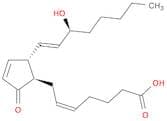
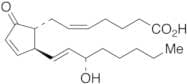
CAS:Formula:C20H30O4Purity:98%Color and Shape:LiquidMolecular weight:334.4498Prostaglandin A2
CAS:Controlled ProductApplications Prostaglandin A2 is a naturally occurring prostaglandin in gorgonian corals where it may function in self defense. Prostaglandin A2 is generally not present in mammals. Prostaglandin A2 has low biological potency in most bioassays, but it does show some antiviral/antitumor activity. Prostaglandin A2 has also been shown to act as a vasodilator with natriuretic properties.
References Stenson, W., et al.: J. Immunol., 124, 2100 (1980), Bray, M., et al.: Prostaglandins, 22, 213 (1981), Funk, C., et al.: Science, 294, 1871 (2001), Newman, J., et al.: J. Lipid Res., 43, 1563 (2002), Blaho, V., et al.: J. Biol. Chem., 284, 21599 (2009),Formula:C20H30O4Color and Shape:NeatMolecular weight:334.45Prostaglandin A6
CAS:Prostaglandin A6 is a lipid mediator that is involved in the regulation of many physiological and pathological processes. It has been shown to inhibit the activity of ion channels, increase the permeability of cell membranes, and activate G protein-coupled receptors. Prostaglandin A6 has been extensively used as an inhibitor in research tools for studying cell biology, peptides, pharmacology, ligand binding, and protein interactions. In addition, prostaglandin A6 is a potent activator of G protein-coupled receptors that are found in cardiovascular tissues. This compound also inhibits platelet aggregation and activates vasodilatory pathways.
Formula:C20H30O4Purity:Min. 95%Molecular weight:334.4 g/molProstaglandin A2
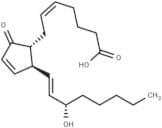
CAS:PGA2 is a naturally occurring prostaglandin in gorgonian corals where it may function in self defense. It is generally not present in mammals. PGA2 has low biological potency in most bioassays, but it does show some antiviral/antitumor activity.[1] At a 25 uM concentration, PGA2 blocks the cell cycle progression of NIH 3T3 cells at the G1 and G2/M phase .[2] It has also been shown to act as a vasodilator with natriuretic properties.[3]Formula:C20H30O4Color and Shape:SolidMolecular weight:334.45