CAS 13350-09-9
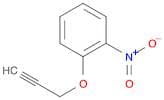
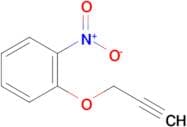
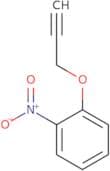
:1-NITRO-2-PROP-2-YNYLOXY-BENZENE
Description:
1-Nitro-2-prop-2-ynyloxy-benzene, with the CAS number 13350-09-9, is an organic compound characterized by the presence of a nitro group and a propyne moiety attached to a benzene ring. The nitro group (-NO2) is a strong electron-withdrawing group, which can influence the compound's reactivity and stability. The prop-2-yne group introduces a triple bond, contributing to the compound's unsaturation and potential for further chemical reactions, such as addition reactions. This compound is typically used in organic synthesis and may serve as an intermediate in the production of more complex molecules. Its physical properties, such as solubility and melting point, can vary based on the specific conditions and purity of the sample. Additionally, the presence of both the nitro and alkyne functionalities suggests that it may exhibit unique electronic properties, making it of interest in materials science and medicinal chemistry. Safety precautions should be taken when handling this compound, as nitro compounds can be sensitive and potentially hazardous.
Formula:C9H7NO3
Sort by
Purity (%)
0
100
|
0
|
50
|
90
|
95
|
100
Found 3 products.
Benzene,1-nitro-2-(2-propyn-1-yloxy)-
CAS:Formula:C9H7NO3Purity:95%Color and Shape:SolidMolecular weight:177.15681-nitro-2-(prop-2-yn-1-yloxy)benzene
CAS:1-nitro-2-(prop-2-yn-1-yloxy)benzene (NPPB) is a p-glycoprotein inhibitor that blocks the efflux of anticancer drugs from cancer cells. It has been shown to inhibit the cytotoxicity of verapamil, which is a calcium channel blocker used in the treatment of high blood pressure and coronary artery disease. NPPB is also a modulator that inhibits multidrug resistance, which is the ability of cancer cells to resist chemotherapy. This drug has been shown to induce apoptosis in a dose dependent manner, which means that it kills cancer cells when they are exposed to higher doses. NPPB can be used as an anticancer drug in combination with other drugs to increase its effectiveness and reduce toxicity.
Formula:C9H7NO3Purity:Min. 95%Molecular weight:177.15 g/mol