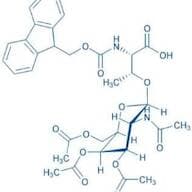
CAS 133575-43-6
:Fmoc-L-Thr(β-D-GalNAc(Ac)3)-OH
Description:
Fmoc-L-Thr(β-D-GalNAc(Ac)3)-OH is a chemically modified amino acid derivative that features a phenylmethoxycarbonyl (Fmoc) protecting group on the L-threonine side chain. This compound is characterized by the presence of a β-D-galactosamine (GalNAc) moiety, which is acetylated at three positions, enhancing its solubility and stability. The Fmoc group serves as a protective group for the amino functionality, commonly used in peptide synthesis to prevent unwanted reactions during coupling processes. The presence of the GalNAc unit suggests potential applications in glycopeptide synthesis, which can be relevant in the development of glycoprotein mimetics or in studying carbohydrate-protein interactions. The compound is typically used in research settings, particularly in the fields of biochemistry and medicinal chemistry, where it can facilitate the exploration of glycosylation effects on biological activity. Its unique structure allows for specific interactions in biological systems, making it a valuable tool in the synthesis of complex biomolecules.
Formula:C33H38N2O13
Synonyms:- Fmoc-L-Thr(2-D-GalNAc(Ac)3)-OH
- Fmoc-Thr(GalNAc(Ac)3-b-D)-OH
- Fmoc-Thr(GalNAc(Ac)?-β-D)-OH
Sort by
Purity (%)
0
100
|
0
|
50
|
90
|
95
|
100
Found 3 products.
Fmoc-Thr(GalNAc(Ac)₃-β-D)-OH
CAS:Bachem ID: 4082689.
Formula:C33H38N2O13Purity:98.6%Color and Shape:White PowderMolecular weight:670.67Fmoc-Thr(GalNAc(Ac)3-β-D)-OH
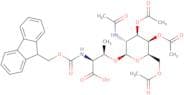
CAS:Fmoc-Thr(GalNAc(Ac)3-β-D)-OH impedes the proliferation of cancer cells by selectively interacting with complex oncogenic pathways and enhancing the immuneFormula:C33H38N2O13Molecular weight:670.662-Acetamido-3,4,6-tri-O-acetyl-2-deoxy-β-D-galactopyranosyl-Fmoc threonine
CAS:2-Acetamido-3,4,6-tri-O-acetyl-2-deoxy-β-D-galactopyranosyl-(1→4)-threonine is a fine chemical that is used as a building block in the synthesis of other compounds. The CAS No. 133575-43-6 identifies this compound as an intermediate in the synthesis of complex compounds and scaffolds. 2AATG2T has been shown to be a versatile building block that can be used in reactions such as amide bond formation, esterification, and peptide coupling reactions. This compound has been shown to be useful for research purposes and as a reagent for biological studies.Formula:C33H38N2O13Purity:Min. 95 Area-%Molecular weight:670.66 g/mol