CAS 13362-28-2
:2-Aminoisonicotinic acid
Description:
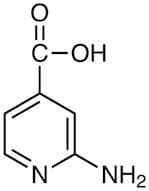
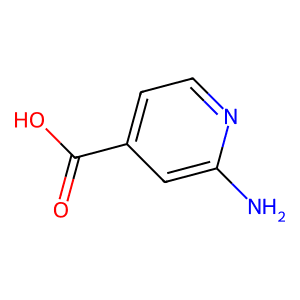
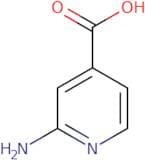
2-Aminoisonicotinic acid, also known as 2-amino-3-pyridinecarboxylic acid, is an organic compound characterized by its pyridine ring structure with an amino group and a carboxylic acid functional group. It is a derivative of isonicotinic acid, where the amino group is positioned at the second carbon of the pyridine ring. This compound is typically a white to off-white crystalline solid and is soluble in water due to the presence of the carboxylic acid group, which can ionize in solution. 2-Aminoisonicotinic acid exhibits properties that make it useful in various applications, including pharmaceuticals, where it may serve as an intermediate in the synthesis of biologically active compounds. Additionally, it has potential roles in medicinal chemistry, particularly in the development of drugs targeting various diseases. The compound's structure allows for hydrogen bonding, which can influence its reactivity and interactions with other molecules. Overall, 2-aminoisonicotinic acid is a versatile compound with significant relevance in chemical research and applications.
Formula:C6H6N2O2
InChI:InChI=1/C6H6N2O2/c7-5-3-4(6(9)10)1-2-8-5/h1-3H,(H2,7,8)(H,9,10)
SMILES:c1c[nH]c(=N)cc1C(=O)O
Synonyms:- 2-Amino-4-Pyridine Carboxylic Acid
- 2-Aminopyridine-4-carboxylic acid
Sort by
Purity (%)
0
100
|
0
|
50
|
90
|
95
|
100
Found 6 products.
2-Aminoisonicotinic Acid
CAS:Formula:C6H6N2O2Purity:>97.0%(T)(HPLC)Color and Shape:White to Orange to Green powder to crystallineMolecular weight:138.132-AMINO-4-PYRIDINECARBOXYLIC ACID
CAS:Formula:C6H6N2O2Purity:98%Color and Shape:SolidMolecular weight:138.12402-Aminoisonicotinic acid
CAS:2-Aminoisonicotinic acidFormula:C6H6N2O2Purity:97%Color and Shape: off white solidMolecular weight:138.12g/mol2-Aminopyridine-4-carboxylic acid
CAS:Formula:C6H6N2O2Purity:97%Color and Shape:Solid, Yellow powderMolecular weight:138.1262-Amino-4-pyridinecarboxylic acid
CAS:2-Amino-4-pyridinecarboxylic acid (APC) is a synthetic compound that has been shown to be effective against cancer cells. It can induce the acetylation of histones, which in turn inhibits protein synthesis and leads to cell death. APC also has potent anti-cancer activity against hypoxic tumor cells. The mechanism of action of APC is not yet fully understood, but it is thought to involve the production of reactive oxygen species and the inhibition of DNA repair enzymes. APC is being investigated as a potential candidate for wastewater treatment due to its ability to remove chloride ions from waste water. It can also be used as an iron chelator, which may lead to its use in radiation therapy for cancer treatment.Formula:C6H6N2O2Purity:Min. 95%Color and Shape:PowderMolecular weight:138.12 g/mol