CAS 13431-39-5
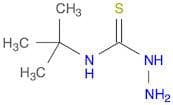
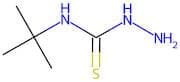
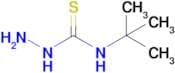
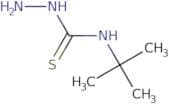
:N-(1,1-Dimethylethyl)hydrazinecarbothioamide
Description:
N-(1,1-Dimethylethyl)hydrazinecarbothioamide, with the CAS number 13431-39-5, is a chemical compound characterized by its hydrazine and thioamide functional groups. This substance typically appears as a colorless to pale yellow liquid or solid, depending on its purity and specific conditions. It is known for its potential applications in organic synthesis and as a building block in the development of various pharmaceuticals and agrochemicals. The presence of the dimethyl group contributes to its steric hindrance, which can influence its reactivity and interaction with other molecules. Additionally, the thioamide group imparts unique chemical properties, such as the ability to participate in nucleophilic reactions. Safety considerations are important when handling this compound, as it may pose health risks if inhaled or ingested, and appropriate protective measures should be taken. Overall, N-(1,1-Dimethylethyl)hydrazinecarbothioamide is a compound of interest in chemical research, particularly in the fields of medicinal chemistry and material science.
Formula:C5H13N3S
InChI:InChI=1S/C5H13N3S/c1-5(2,3)7-4(9)8-6/h6H2,1-3H3,(H2,7,8,9)
InChI key:InChIKey=ZUWRCNZOBNETMU-UHFFFAOYSA-N
SMILES:N(C(C)(C)C)C(NN)=S
Synonyms:- 1-Amino-3-tert-butylthiourea
- 3-Amino-1-tert-butylthiourea
- 4-tert-Butylthiosemicarbazide
- B 1179
- Hydrazinecarbothioamide, N-(1,1-dimethylethyl)-
- N-(1,1-Dimethylethyl)hydrazinecarbothioamide
- N-tert-butylhydrazinecarbothioamide
- Semicarbazide, 4-tert-butyl-3-thio-
- 4-tert-Butyl-3-thiosemicarbazide
Sort by
Purity (%)
0
100
|
0
|
50
|
90
|
95
|
100
Found 4 products.
4-tert-Butyl-3-thiosemicarbazide
CAS:Formula:C5H13N3SPurity:97%Color and Shape:SolidMolecular weight:147.24184-tert-Butyl-3-thiosemicarbazide
CAS:4-tert-Butyl-3-thiosemicarbazidePurity:≥95%Color and Shape:White SolidMolecular weight:147.24g/mol4-tert-Butyl-3-thiosemicarbazide
CAS:4-tert-Butyl-3-thiosemicarbazide is an imine that binds to cisplatin, a platinum-based anti-cancer drug. It has been shown to be selective for the bladder cancer cells in vitro and in vivo. 4BTTSC has been validated by high performance liquid chromatography (HPLC) and nuclear magnetic resonance (NMR) spectra. The binding of 4BTTSC to cisplatin results in the formation of cisplatin chloride, which can be detected by autofluorescence spectrometry.
Formula:C5H13N3SPurity:Min. 95%Molecular weight:147.24 g/mol