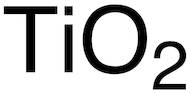
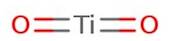
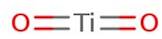
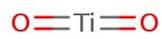
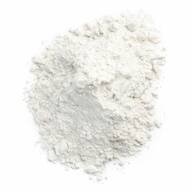
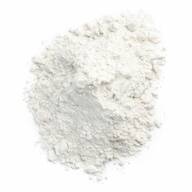
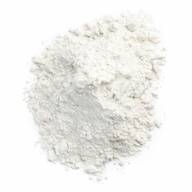
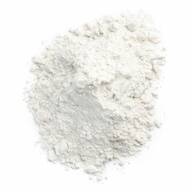
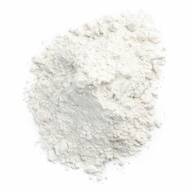
CAS 13463-67-7
:Titania
- 1007Mc
- 1008Si
- 1120Zs95A8
- 1385Rn59
- 1500D
- 18Nr-Ao
- 234Da
- 500Hd
- 5480Mr
- 5484Wj
- 710T
- 760T
- 7910Dl
- 7M3001N
- 8180Tc
- 9W1100
- AgriTitan
- Ajantox
- CSB
- CZ
- Cab-O-Ti
- Cg-T
- Cr-El
- Cs-C
- Csb-M
- Dif-Ab-10W
- Finntitan
- Flamenco
- Fs-A
- Hrc-Ii
- Isoflux
- It-S
- Jhnm-W
- Jrnc
- Jupiter
- Kowet
- Kronos
- MCH
- Micromarimo
- New-Sp
- Nt-C
- Nufil
- Nw-Tio-A
- R706S
- REX
- RLX
- Rayox
- Rdi-S
- Rlx-A
- Rps-V
- Rr-Bc
- Rtipbc
- Rtspnb
- Rtt-Mibk
- Rutile
- Sachtopore
- Sad-M
- Smf-Lv
- Spp-M
- Srd-K
- Srd-M
- Srd-Pgme
- Srd-W
- Ssp-M
- T-Cote
- T-Lalt
- TS
- Ti-O-N
- Ti-Pure
- Ti-W
- TiO<sub>2</sub>-SDS
- TioTio
- Titan(Iv)-Oxid
- Titandioxid
- Titania
- Titanox
- Tofix-P
- Tto-S-1
- UT-White
- UV-Titan
- Unitane
- Vhp-Dcs
- WD-Ti50
- Zxl-Cqs
- C.I. Pigment White 6
- C.I. 77891
- Titanium dioxide
- dioxotitanium
- titanium white
- Titanium dioxide,anatase
- Titanium peroxide (TiO2)
- Titanium Dioxide Anatase
- Titanium oxide (TiO2)
- Titanium dioxide,rutile
- Tilac D
- Titanium(Ⅳ)oxide
- TiLox-Black
- Titanium Dioxide food grade
- Pigment Black 35
- Rutiox CR
- Titanium(IV)oxide
- Titanium (IV) dioxide
- pigment white
- rutile titanium dioxide
- Titanium Oxide
- anatase titanium dioxide
- Titanium dioxide
- See more synonyms
Titanium(IV) Oxide, AEROXIDE® P 25
CAS:Formula:TiO2Color and Shape:White to Almost white powder to crystalMolecular weight:79.87Titanium(IV) oxide, 20-36% in H{2}O colloidal dispersion
CAS:UV protection in clear coatingsFormula:O2TiColor and Shape:DispersionMolecular weight:79.87Titanium(IV) oxide, Puratronic™, 99.995% (metals basis)
CAS:Titanium(IV) oxide is used in paints, varnishes, paper, plastics printing inks, sun screen, fibers, rubber, cosmetic products, anti-fogging coatings, foodstuffs, pure titanium, glass, glass ceramics, memristor, electrical ceramics, catalysts, electric conductors and chemical intermediates. It exhFormula:O2TiPurity:99.995%Color and Shape:White, PowderMolecular weight:79.87Titanium(IV) oxide, high surface area, 99.9% (metals basis)
CAS:Photocatalyst, catalyst, catalyst supportTitanium(IV) oxide is used in paints, varnishes, paper, plastics printing inks, sun screen, fibers, rubber, cosmetic products, anti-fogging coatings, foodstuffs, pure titanium, glass, glass ceramics, memristor, electrical ceramics, catalysts, electric conductFormula:O2TiPurity:99.9%Molecular weight:79.87Titanium(IV) oxide, sintered lumps, 99.5%
CAS:Titanium(IV) oxide, sintered lumps, 99.5%
Formula:TiO2Purity:99.5%Color and Shape:white lumpMolecular weight:79.90Titanium(IV) oxide (99.99+%-Ti) PURATREM
CAS:Titanium(IV) oxide (99.99+%-Ti) PURATREM
Formula:TiO2Purity:(99.99+%-Ti)Color and Shape:white pwdr.Molecular weight:79.90Titanium Dioxide
CAS:Titanium oxidesFormula:O2TiColor and Shape:White PowderMolecular weight:79.9 g/molTitanium dioxide
CAS:Formula:TiO2Purity:≥ 98.0%Color and Shape:White to almost white powderMolecular weight:79.87Titanium dioxide, 99%, Ph. Eur., BP, USP grade
CAS:Formula:TiO2Purity:98.0 - 100.5 % (EP)Color and Shape:White to almost white powderMolecular weight:79.87Titanium(IV) oxide, 99+%
CAS:Titanium(IV) oxide, 99+%
Formula:TiO2Purity:99+%Color and Shape:1.0-1.3 micron white pwdr.Molecular weight:79.90Titanium(IV) oxide Powder 220 nm, 95%
CAS:Formula:TiO2Purity:≥ 95.0%Color and Shape:White powderMolecular weight:79.90Titanium(IV) oxide, 99.999%
CAS:Formula:TiO2Purity:≥ 99.999%Color and Shape:White to off-white powderMolecular weight:79.90Titanium(IV) oxide, 99.9%
CAS:Formula:TiO2Purity:≥ 99.9%Color and Shape:White to grey solid piecesMolecular weight:79.90Titanium(IV) oxide, 99.5%
CAS:Formula:TiO2Purity:≥ 99.5%Color and Shape:White to off-white powderMolecular weight:79.90NorPro(TM) Titanium(IV) oxide catalyst support
CAS:Formula:TiO2Color and Shape:White to light-grey pelletsMolecular weight:79.90Titanium(IV) oxide-Nano Powder (anatase); 99.9%
CAS:Formula:TiO2Purity:≥ 99.9%Color and Shape:White powderMolecular weight:79.90Titanium Dioxide
CAS:Controlled ProductApplications Titanium Dioxide is an effective bacteriocide when it is irradiated with UV-light, causing lipid peroxidation. Also commonly used in paint, coating materials and cosmetics due to its low toxicity.
References Maness, P. et al.: App. Env. Microbio., 65, 4094 (1999); Wang, J. et al.: Mut. Res., 628, 99 (2007);Formula:O2TiColor and Shape:NeatMolecular weight:79.87Titanium (IV) oxide - 99%
CAS:Titanium (IV) oxide is a white, lustrous, relatively hard, corrosion-resistant material that has excellent mechanical and chemical stability. It is used in many products including paints, plastics, paper coatings, and food packaging. Titanium dioxide has been shown to cause physiological effects such as decreased photosynthetic activity when exposed to high concentrations of water vapor. It also has the ability to act as a catalyst for the transfer reactions of zirconium oxide. This compound is not toxicologically dangerous and can be safely disposed of through wastewater treatment or thermal expansion. Titanium dioxide is used in analytical methods such as plasma mass spectrometry for measuring chlorophyll a levels in plants.
Formula:O2TiPurity:Min. 99.0%Color and Shape:White Off-White PowderMolecular weight:79.87 g/molTitanium (IV) oxide - Rutile nanopowder ca. 25 nm particle size
CAS:Rutile titanium dioxide is a naturally occurring mineral that is composed of titanium (IV) oxide and oxygen. Rutile TiO2 nanopowder has shown to be an effective catalyst for the decomposition of organic matter in wastewater treatment, due to its strong reactive properties. Rutile TiO2 nanopowder can also be used as an additive in polymerase chain reactions (PCR). It has been shown to have a number of physiological effects, such as changes in the expression of genes related to the pathogenesis of certain cancers. The mechanism by which this occurs is not yet fully understood and requires further research. Rutile TiO2 nanopowder is produced by laser ablation and has been used for analytical methods such as electrochemical impedance spectroscopy. The toxicity of rutile TiO2 nanopowder has been studied extensively with regards to its effects on animals, humans, and plants.Formula:TiO2Purity:(%) Min. 98%Color and Shape:White Off-White PowderMolecular weight:79.87 g/molTitanium Dioxide Ultrapure Nanopowder, 250nm, 99.97%
CAS:Formula:TiO2RutilePurity:min. 99.97%Color and Shape:White, PowderMolecular weight:79.87Titanium Dioxide Photocatalyst Nanopowder, 7nm, 95%
CAS:Formula:TiO2AnatasePurity:min. 95%Color and Shape:White, PowderMolecular weight:79.87Titanium Dioxide Rutile Nanopowder, 20nm, 92%
CAS:Formula:TiO2RutilePurity:min. 92%Color and Shape:White, PowderMolecular weight:79.87Titanium Dioxide Rutile Nanopowder, 50nm, 99%
CAS:Formula:TiO2RutilePurity:min. 99%Color and Shape:White, PowderMolecular weight:79.87Titanium Dioxide Catalyst Nanopowder, 50nm, 98%
CAS:Formula:TiO2AnatasePurity:min 98%Color and Shape:Off-white, PowderMolecular weight:79.87Titanium Dioxide AnataseNanodispersion (15nm), 15% in water
CAS:Formula:TiO2AnatasePurity:min. 99.5%Color and Shape:Milky white, Colloidal dispersionMolecular weight:79.87Titanium Dioxide extrapure, 98%
CAS:Formula:TiO2Purity:min. 98%Color and Shape:White to off-white, PowderMolecular weight:79.87Titanium Dioxide Nanowires (Type 2)
CAS:Formula:TiO2RutileColor and Shape:White, Semi - pasteMolecular weight:79.87Titanium Dioxide Rutile Nanodispersion (30nm), 40% in water
CAS:Formula:TiO2RutileColor and Shape:White, Colloidal dispersionMolecular weight:79.87Titanium Dioxide Rutile Nanopowder (Hydrophilic), 50nm, 99%
CAS:Formula:TiO2RutilePurity:min. 99%Color and Shape:White to almost white, PowderMolecular weight:79.87Ref: 4Z-D-164100
Discontinued product