CAS 13484-51-0
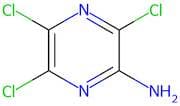
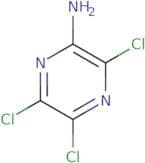
:3,5,6-Trichloro-2-pyrazinamine
Description:
3,5,6-Trichloro-2-pyrazinamine is a chemical compound characterized by its pyrazinamine structure, which features a pyrazine ring substituted with three chlorine atoms and an amino group. This compound is typically a solid at room temperature and is known for its potential applications in various fields, including agrochemicals and pharmaceuticals. The presence of chlorine atoms contributes to its reactivity and may influence its biological activity. As a chlorinated derivative, it may exhibit properties such as increased lipophilicity and stability, which can affect its behavior in biological systems. The amino group can participate in hydrogen bonding, enhancing its solubility in polar solvents. Safety data sheets indicate that handling this compound requires caution due to its potential toxicity and environmental impact. Overall, 3,5,6-Trichloro-2-pyrazinamine is a compound of interest for research and development, particularly in the context of its chemical properties and potential applications.
Formula:C4H2Cl3N3
InChI:InChI=1S/C4H2Cl3N3/c5-1-2(6)10-4(8)3(7)9-1/h(H2,8,10)
InChI key:InChIKey=NRDPLJROSGVEDO-UHFFFAOYSA-N
SMILES:ClC=1C(Cl)=NC(N)=C(Cl)N1
Synonyms:- 2-Amino-3,5,6-trichloropyrazine
- Pyrazinamine, 3,5,6-trichloro-
- Pyrazine, aminotrichloro-
- 3,5,6-Trichloro-2-pyrazinamine
- 2-Pyrazinamine, 3,5,6-trichloro-
Sort by
Purity (%)
0
100
|
0
|
50
|
90
|
95
|
100
Found 4 products.
3,5,6-Trichloropyrazin-2-amine
CAS:3,5,6-Trichloropyrazin-2-aminePurity:98%Molecular weight:198.44g/molTrichloropyrazin-2-amine
CAS:Trichloropyrazin-2-amine is an inhibitor of bacterial growth, which is active against many microorganisms. It inhibits the enzyme carbonic anhydrase, which is required for the conversion of bicarbonate to carbon dioxide and water in the cytoplasm. This inhibition leads to a decrease in intracellular pH, which causes cell lysis, cell death, and inhibition of growth. Trichloropyrazin-2-amine has shown inhibitory activity against many microorganisms, including Escherichia coli, Bacillus subtilis, Pseudomonas aeruginosa, Staphylococcus aureus, Enterobacter cloacae and Klebsiella pneumoniae. This compound also has been shown to be a cytotoxic agent that can inhibit tumor cell growth in vitro.Formula:C4H2Cl3N3Purity:Min. 95%Molecular weight:198.43 g/mol