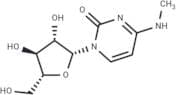
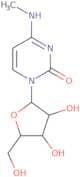
CAS 13491-42-4
:2(1H)-Pyrimidinone, 1-b-D-arabinofuranosyl-4-(methylamino)-
Description:
2(1H)-Pyrimidinone, 1-b-D-arabinofuranosyl-4-(methylamino)-, commonly referred to by its CAS number 13491-42-4, is a nucleoside analog characterized by its pyrimidine base structure and an arabinofuranosyl sugar moiety. This compound features a methylamino group at the 4-position of the pyrimidinone ring, which can influence its biological activity and interactions. It is typically soluble in polar solvents due to the presence of hydroxyl groups in the sugar component. The compound is of interest in medicinal chemistry, particularly for its potential antiviral and anticancer properties, as it may interfere with nucleic acid synthesis. Its structural characteristics allow it to mimic natural nucleosides, which can facilitate its incorporation into RNA or DNA during replication processes. As with many nucleoside analogs, the pharmacokinetics and biological efficacy can vary based on modifications to the sugar and base components, making it a subject of ongoing research in the field of drug development.
Formula:C10H15N3O5
Synonyms:- Cytosine,1-b-D-arabinofuranosyl-N-methyl-(7CI,8CI)
- N4-Methyl-araC
- Nsc 343653
Sort by
Purity (%)
0
100
|
0
|
50
|
90
|
95
|
100
Found 2 products.
N4-Methylarabinocytidine
CAS:N4-Methylarabinocytidine is a Nucleoside Derivative - Arabino-nucleoside, N-Methylated nucleoside.Formula:C10H15N3O5Color and Shape:SolidMolecular weight:257.24Ref: TM-TNU0391
5mgTo inquire10mgTo inquire25mgTo inquire50mgTo inquire100mgTo inquire500mgTo inquire1-(b-D-arabinofuranosyl)-N4-methylcytosine
CAS:1-(b-D-arabinofuranosyl)-N4-methylcytosine is a nucleoside analog that inhibits DNA synthesis in rapidly dividing cells. It is a modified form of cytosine, with an extra methyl group attached to the 4th carbon atom in the pyrimidine ring. 1-(b-D-arabinofuranosyl)-N4-methylcytosine has antiviral properties and is synthesized by reacting 2,4,5-triphosphate with arabinose and methyl iodide to give 1-(b-D-arabinofuranosyl)-N4-methylcytosine monophosphate. This compound was first reported in 1970 as part of a research program on anticancer agents.Purity:Min. 95%