CAS 13494-07-0
:3,5-Dimethyl-1,2-cyclopentanedione
Description:
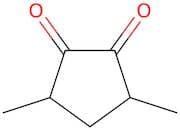
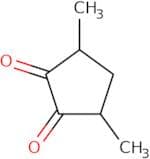
3,5-Dimethyl-1,2-cyclopentanedione, with the CAS number 13494-07-0, is an organic compound characterized by its cyclic structure and the presence of two ketone functional groups. This compound features a cyclopentane ring with two methyl groups attached at the 3 and 5 positions, and two carbonyl groups at the 1 and 2 positions, which contribute to its reactivity and potential applications in organic synthesis. It is typically a colorless to pale yellow liquid or solid, depending on the temperature and purity. The presence of the diketone functionality allows for various chemical reactions, including condensation and oxidation, making it useful in the synthesis of more complex organic molecules. Additionally, its structural features may impart interesting properties such as solubility in organic solvents and potential biological activity. As with many diketones, it may exhibit tautomerism, leading to different structural forms in solution. Safety data should be consulted for handling and storage, as it may pose health risks if not managed properly.
Formula:C7H10O2
InChI:InChI=1S/C7H10O2/c1-4-3-5(2)7(9)6(4)8/h4-5H,3H2,1-2H3
InChI key:InChIKey=MIDXCONKKJTLDX-UHFFFAOYSA-N
SMILES:O=C1C(=O)C(C)CC1C
Synonyms:- 3,5-Dimethyl-1,2-cyclopentanedione
- Coronol
- 1,2-Cyclopentanedione, 3,5-dimethyl-
Sort by
Purity (%)
0
100
|
0
|
50
|
90
|
95
|
100
Found 5 products.
3,5-Dimethyl-1,2-Cyclopentanedione
CAS:Formula:C7H10O2Purity:98%Color and Shape:SolidMolecular weight:126.1531Ref: IN-DA003IOA
100mg24.00€250mg28.00€1g35.00€5g74.00€10g110.00€15g156.00€25g179.00€50g332.00€75g653.00€100g692.00€3,5-Dimethylcyclopentane-1,2-dione
CAS:3,5-Dimethylcyclopentane-1,2-dione
Purity:98+%Molecular weight:126.15g/mol3,5-Dimethylcyclopentane-1,2-dione
CAS:3,5-Dimethylcyclopentane-1,2-dione is a cyclopentane derivative containing a carbonyl group, widely used in biochemical experiments and drug synthesis research.Formula:C7H10O2Molecular weight:126.153,5-Dimethyl-1,2-cyclopentadione
CAS:3,5-Dimethyl-1,2-cyclopentadione (DMC) is a natural compound that belongs to the group of cyclopentadione compounds. It is used in analytical chemistry for the determination of 3,5-dimethyl-1,2-dihydropyridinium ion (DMP). The structural analysis of DMC has been shown with synchronous fluorescence. This method can be used to detect cancer cells in human tissue samples. DMC was also found to be toxic to diabetic patients when administered orally at a concentration of 10 mM. The toxicity study showed that this compound causes severe hepatotoxicity and kidney damage. Whole genome sequencing and dietary studies were performed by the researchers to investigate the cause of an outbreak of diarrhea among school children in Japan. Sodium hydroxide solution was used as a sample preparation agent in these studies. Glycosidic bonds are found in many natural products such as DMC and are important for binding water moleculesFormula:C7H10O2Purity:Min. 95%Color and Shape:PowderMolecular weight:126.15 g/mol