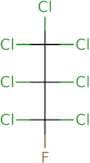
CAS 135401-87-5
:Propane, heptachlorofluoro-
Description:
Propane, heptachlorofluoro- (CAS 135401-87-5) is a synthetic chemical compound belonging to the class of halogenated hydrocarbons. It is characterized by the presence of seven chlorine and fluorine atoms attached to a propane backbone, which significantly alters its physical and chemical properties compared to unhalogenated hydrocarbons. This compound is typically colorless and may have a faint odor, depending on its formulation. It is known for its stability and resistance to degradation, making it useful in various industrial applications, including as a refrigerant or in the production of specialty chemicals. However, due to its halogenated nature, it may pose environmental and health risks, particularly concerning its potential for bioaccumulation and toxicity. Safety data sheets should be consulted for handling and exposure guidelines, as well as for information on its reactivity and compatibility with other substances. Overall, propane, heptachlorofluoro- exemplifies the complexities associated with halogenated organic compounds in both utility and environmental impact.
Formula:C3Cl7F
Synonyms:- Propane, heptachlorofluoro-
- Cfc-211
- Fluoroheptachloropropane
Sort by
Purity (%)
0
100
|
0
|
50
|
90
|
95
|
100
Found 1 products.
1,1,1,2,2,3,3-Heptachloro-3-Fluoropropane
CAS:Controlled Product1,1,1,2,2,3,3-Heptachloro-3-Fluoropropane (HFC-227ea) is a synthetic chlorofluorocarbon that was developed as an environmentally friendly substitute for chlorodifluoromethane. HFC-227ea is used in refrigeration and air conditioning systems due to its high heat capacity. This chemical has been shown to inhibit serotonin reuptake and may play a role in the control of moods. HFC-227ea can also be used as a solvent for organic materials that cannot be dissolved by other chemicals. It is reactive with water and may react with other chemicals or cause fires if exposed to open flames. HFC 227ea has been shown to have toxic effects on the nervous system when injected into rats. The LD50 (the dose at which 50% of animals die) for this chemical is between 2 and 6 milligrams per kilogram of body weightFormula:C3Cl7FPurity:Min. 95%Molecular weight:303.2 g/mol