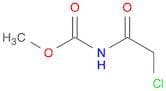
CAS 13558-70-8
:Methyl N-(chloroacetyl)carbamate
Description:
Methyl N-(chloroacetyl)carbamate is an organic compound characterized by its carbamate functional group, which is derived from carbamic acid. It features a methyl ester and a chloroacetyl substituent, contributing to its reactivity and potential applications in various chemical processes. This compound typically appears as a colorless to pale yellow liquid or solid, depending on its purity and specific conditions. It is known for its use in organic synthesis, particularly in the production of pharmaceuticals and agrochemicals. The presence of the chloroacetyl group enhances its electrophilic character, making it useful in nucleophilic substitution reactions. Methyl N-(chloroacetyl)carbamate is also subject to regulations due to its potential toxicity and environmental impact, necessitating careful handling and disposal. As with many chemical substances, safety data sheets (SDS) should be consulted for information on hazards, handling, and first aid measures. Overall, this compound exemplifies the complexity and utility of carbamate derivatives in synthetic chemistry.
Formula:C4H6ClNO3
InChI:InChI=1/C4H6ClNO3/c1-9-4(8)6-3(7)2-5/h2H2,1H3,(H,6,7,8)
SMILES:COC(=O)N=C(CCl)O
Synonyms:- Methyl (Chloroacetyl)Carbamate
Sort by
Purity (%)
0
100
|
0
|
50
|
90
|
95
|
100
Found 2 products.
Methyl N-(2-chloroacetyl)carbamate
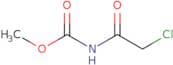
CAS:Formula:C4H6ClNO3Color and Shape:SolidMolecular weight:151.5483Methyl N-(2-chloroacetyl)carbamate
CAS:Methyl N-(2-chloroacetyl)carbamate is a chemical compound that has been used in the synthesis of other compounds. It is an orally active anthelmintic agent that is effective against nematodes and trematodes. Methyl N-(2-chloroacetyl)carbamate binds to thiadiazole, carbon disulfide, and sulfinyl groups in the parasite's body. This binding inhibits the production of tumour necrosis factor-α (TNF-α) and interleukin-1β (IL-1β), as well as inducing apoptosis in lymphocytic leukemia cells. In addition, Methyl N-(2-chloroacetyl)carbamate has been shown to inhibit DNA replication by binding to aralkyl groups and cycloalkenyl groups. It also has functional groups that can act as sulfur donors or acceptors in organic synthesis reactions.Formula:C4H6ClNO3Purity:Min. 95%Molecular weight:151.55 g/mol