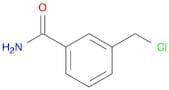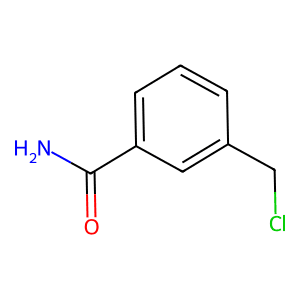
CAS 135654-16-9
:3-(CHLOROMETHYL)BENZAMIDE
- Benzamide, 3-(chloromethyl)- (9CI)
3-(Chloromethyl)benzamide
CAS:Formula:C8H8ClNOPurity:97%Color and Shape:SolidMolecular weight:169.60823-(Chloromethyl)benzamide
CAS:3-(Chloromethyl)benzamidePurity:95%Color and Shape:White SolidMolecular weight:169.61g/mol3-Chloromethylbenzamide
CAS:3-Chloromethylbenzamide is a potent inhibitor of cyclic nucleotide phosphodiesterases. It is synthesised from dimethylformamide and propenoic acid, and has been shown to be effective in the treatment of cancer. 3-Chloromethylbenzamide inhibits the activity of cyclic nucleotide phosphodiesterases, which are enzymes that break down cyclic AMP and cAMP. This inhibition leads to an increase in intracellular levels of these nucleotides, which can result in cancer cell death by apoptosis. 3-Chloromethylbenzamide has also been shown to be a potent inhibitor of hydroxymethylglutaryl coenzyme A reductase (HMGCR), which is the enzyme that catalyzes the conversion of HMG-CoA to mevalonic acid. The inhibition of this enzyme leads to decreased production of cholesterol and other steroids, as well as increased levels of meval
Formula:C8H8ClNOPurity:Min. 95%Molecular weight:169.61 g/molRef: 3D-KFA65416
Discontinued product