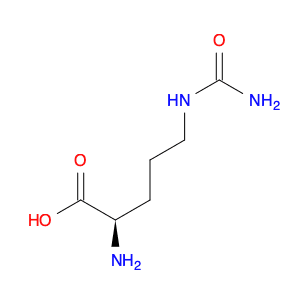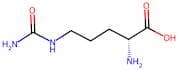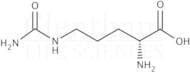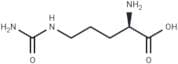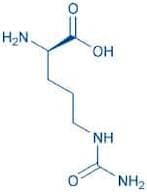
CAS 13594-51-9
:D-Citrulline
Description:
D-Citrulline is a non-essential amino acid that plays a significant role in the urea cycle, facilitating the removal of ammonia from the body. It is a colorless, crystalline substance that is soluble in water and has a slightly sweet taste. D-Citrulline is often found in various foods, particularly in watermelon, and is also produced endogenously in the body. Its primary function involves the conversion to L-arginine, another amino acid that is crucial for the synthesis of nitric oxide, a molecule that helps regulate blood flow and vascular function. Due to its ability to enhance nitric oxide production, D-Citrulline is commonly used as a dietary supplement, particularly among athletes and fitness enthusiasts, to improve exercise performance and recovery. Additionally, it may have potential benefits in cardiovascular health and conditions related to impaired blood flow. Overall, D-Citrulline is recognized for its physiological roles and potential therapeutic applications, making it a subject of interest in both nutrition and medical research.
Formula:C6H13N3O3
InChI:InChI=1/C6H13N3O3/c7-4(5(10)11)2-1-3-9-6(8)12/h4H,1-3,7H2,(H,10,11)(H3,8,9,12)/t4-/m1/s1
SMILES:C(C[C@H](C(=O)O)N)CNC(=N)O
Synonyms:- H-D-Cit-OH
- N~5~-carbamoylornithine
- N~5~-carbamoyl-D-ornithine
- D-Cit-OH
Sort by
Purity (%)
0
100
|
0
|
50
|
90
|
95
|
100
Found 6 products.
D-Citrulline
CAS:D-Citrulline (H-D-Cit-OH), a stereoisomer of L-citrulline, effectively reduces cardiac contractile dysfunction caused by polymorphonuclear leukocyte (PMN) in isolated perfused rat hearts undergoing ischemia/reperfusion. This protective effect is mediated through a non-NO-mediated mechanism.Formula:C6H13N3O3Color and Shape:SolidMolecular weight:175.19H-D-Cit-OH
CAS:Bachem ID: 4014198.
Formula:C6H13N3O3Purity:> 99%Color and Shape:White PowderMolecular weight:175.19