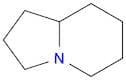
CAS 13618-93-4
:δ-Coniceine
Description:
δ-Coniceine is a bicyclic alkaloid primarily derived from the plant Conium maculatum, commonly known as poison hemlock. This compound is characterized by its structural framework, which includes a piperidine ring fused to a cyclohexene moiety. δ-Coniceine is known for its neurotoxic properties, acting as a competitive antagonist at nicotinic acetylcholine receptors, which can lead to respiratory failure and other severe physiological effects upon exposure. The substance is typically colorless to pale yellow and has a distinctive odor. Its solubility profile indicates that it is soluble in organic solvents but has limited solubility in water. δ-Coniceine has garnered interest in pharmacological research due to its potential effects on the nervous system, although its toxicity limits its practical applications. Safety precautions are essential when handling this compound, as it poses significant health risks. Overall, δ-Coniceine serves as a notable example of the complex interactions between natural products and biological systems.
Formula:C8H15N
InChI:InChI=1S/C8H15N/c1-2-6-9-7-3-5-8(9)4-1/h8H,1-7H2
InChI key:InChIKey=HAJKHJOABGFIGP-UHFFFAOYSA-N
SMILES:C12N(CCC1)CCCC2
Synonyms:- (±)-δ-Coniceine
- 1,2,3,5,6,7,8,8a-Octahydroindolizine
- 1-Azabicyclo[4.3.0]nonane
- Indolizidine
- Indolizine, octahydro-
- δ-(±)-Conicein
- Octahydroindolizine
Sort by
Purity (%)
0
100
|
0
|
50
|
90
|
95
|
100
Found 2 products.