CAS 13629-22-6
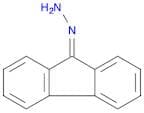
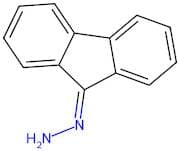
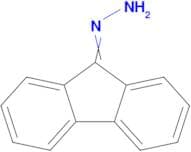
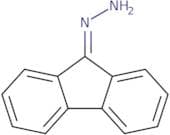
:9H-Fluoren-9-one, hydrazone
Description:
9H-Fluoren-9-one, hydrazone is an organic compound characterized by the presence of a hydrazone functional group attached to a fluorenone structure. This compound typically exhibits a yellow to orange crystalline appearance and is known for its stability under standard conditions. The hydrazone linkage, formed between the carbonyl group of fluorenone and a hydrazine derivative, imparts unique reactivity, making it useful in various chemical reactions, including condensation and coupling reactions. It may also exhibit interesting optical properties, which can be exploited in materials science and organic electronics. The compound is generally soluble in organic solvents, such as ethanol and dichloromethane, but may have limited solubility in water. Its applications can extend to fields such as organic synthesis, pharmaceuticals, and potentially as a dye or pigment due to its chromophoric properties. As with many organic compounds, safety precautions should be taken when handling it, as it may pose health risks if ingested or inhaled.
Formula:C13H10N2
InChI:InChI=1S/C13H10N2/c14-15-13-11-7-3-1-5-9(11)10-6-2-4-8-12(10)13/h1-8H,14H2
InChI key:InChIKey=YCNUILAKOMIBAL-UHFFFAOYSA-N
SMILES:N(N)=C1C=2C(C=3C1=CC=CC3)=CC=CC2
Synonyms:- (9H-Fluoren-9-ylidene)hydrazine
- 9H-Fluoren-9-one hydrazone
- 9H-fluoren-9-ylidenehydrazine
- Fluoren-9-one, hydrazone
- Fluoren-9-ylidenehydrazine
- Fluorenone hydrazone
- NSC 24099
- NSC 90662
Sort by
Purity (%)
0
100
|
0
|
50
|
90
|
95
|
100
Found 4 products.
9-Fluorenone hydrazone
CAS:<p>9-Fluorenone hydrazone is a compound that belongs to the group of chemical compounds known as heterocycles. It can be synthesized by reacting 9-fluorenone with hydrazine. The synthesis proceeds via an intramolecular hydrogen transfer reaction, which forms an unsymmetrical aldehyde. This aldehyde is oxidized to form the corresponding hydrazone through protonation and subsequent attack of a nitrogen nucleophile. Hydrazones are important for their antimicrobial properties and are used in the treatment of bacterial infections such as tuberculosis and leprosy. They are also used in the production of dyes and pharmaceuticals. The mechanism for this reaction involves the formation of an intermediate carbocation, followed by deprotonation to form the final product.</p>Formula:C13H10N2Purity:Min. 95%Color and Shape:Yellow PowderMolecular weight:194.23 g/mol