CAS 13654-62-1
:Ethylsulfonylacetonitrile
Description:
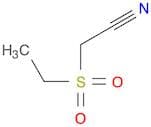
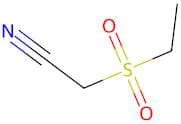
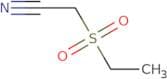
Ethylsulfonylacetonitrile, with the CAS number 13654-62-1, is an organic compound characterized by the presence of both a sulfonyl group and a nitrile functional group. It typically appears as a colorless to pale yellow liquid or solid, depending on its purity and specific conditions. The compound features a sulfonyl group (-SO2-) attached to an ethyl group and an acetonitrile moiety, which contributes to its unique chemical properties. Ethylsulfonylacetonitrile is known for its reactivity, particularly in nucleophilic substitution reactions, making it useful in various synthetic applications in organic chemistry. It may also exhibit polar characteristics due to the presence of the nitrile group, influencing its solubility in polar solvents. Additionally, the compound's structure allows for potential applications in pharmaceuticals and agrochemicals, where it may serve as an intermediate in the synthesis of more complex molecules. As with many chemical substances, proper handling and safety precautions are essential due to potential toxicity and reactivity.
- Sodium,Ethanesulfinate
- Ethane sulfinic acid sodium salt
- Sodium Ethanesulphinate
- Ethanesulfinic acid,sodium salt
Sort by
Purity (%)
0
100
|
0
|
50
|
90
|
95
|
100
Found 4 products.
ethylsulfonylacetonitrile
CAS:Formula:C4H7NO2SPurity:97%Color and Shape:LiquidMolecular weight:133.16892-(Ethylsulfonyl)acetonitrile
CAS:2-(Ethylsulfonyl)acetonitrilePurity:97%Molecular weight:133.17g/mol2-(ethanesulfonyl)acetonitrile
CAS:2-(ethanesulfonyl)acetonitrile is an organic solvent that has a constant boiling point, high reactivity, and low toxicity. It can be used as an acid catalyst in fluorination reactions or to synthesize nitro groups. 2-(ethanesulfonyl)acetonitrile has a reactive functional group and hydrocarbon group that can be substituted with other substituents. The fluorine atom in this compound is replaced with a nitro group when it reacts with oxygen. 2-(ethanesulfonyl)acetonitrile is used in synthetic chemistry to create nitro compounds by the reaction of nitric oxide with the nitro-group on the aromatic ring.
Formula:C4H7NO2SPurity:Min. 95%Molecular weight:133.17 g/mol