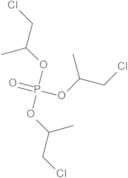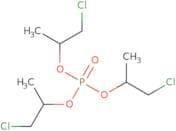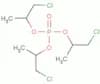
CAS 13674-84-5
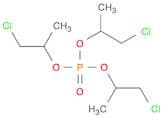
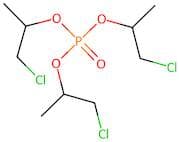
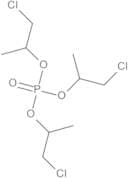
:Tris(2-chloroisopropyl) phosphate
Description:
Tris(2-chloroisopropyl) phosphate, commonly referred to as TCPP, is an organophosphate compound characterized by its use as a flame retardant and plasticizer in various applications, including textiles, plastics, and coatings. It is a colorless to pale yellow liquid with a relatively high boiling point and low volatility, which contributes to its effectiveness in fire resistance. TCPP is known for its ability to enhance the thermal stability of materials while also providing a degree of flexibility. The presence of chlorine atoms in its structure imparts additional flame-retardant properties, making it particularly useful in applications where fire safety is a concern. However, like many organophosphates, TCPP has raised environmental and health concerns due to its potential toxicity and persistence in the environment. It is important to handle this substance with care, following appropriate safety guidelines to minimize exposure. Overall, TCPP plays a significant role in materials science, particularly in enhancing the safety and performance of various products.
Formula:C9H18Cl3O4P
InChI:InChI=1S/C9H18Cl3O4P/c1-7(4-10)14-17(13,15-8(2)5-11)16-9(3)6-12/h7-9H,4-6H2,1-3H3
InChI key:InChIKey=KVMPUXDNESXNOH-UHFFFAOYSA-N
SMILES:P(OC(CCl)C)(OC(CCl)C)(OC(CCl)C)=O
Synonyms:- 1,3-Dichloro-2-propanol phosphate
- 1-Chloro-2-Propanophosphate(3:1)
- 1-Chloro-2-propanolphosphate(3:1)
- 2-Propanol, 1-chloro-, 2,2′,2′′-phosphate
- 2-Propanol, 1-chloro-, phosphate (3:1)
- Amgard TMCP
- Antiblaze 80
- Antiblaze AB 80
- Antiblaze TMCP
- Bs 5852
- Daltoguard F
- Fyrol PCF
- Hostaflam OP 820
- Levagard PP
- Levagard PP 2
- Levagard PP-Z
- Levagard TCPP
- Pc 1389
- Phireguard TCPP
- Phosphoric acid tris(2-chloro-1-methylethyl) ester
- ProFlame PC 1389
- Puma 4010
- Tcpp
- Tmpcc
- Tolgard TMCP
- Tri(2-chloroisopropyl) phosphate
- Tri(chloropropyl) phosphate
- Tris(1-chloro-2-isopropyl)phosphate
- Tris(1-chloropropan-2-yl) phosphate
- Tris(1-chloropropyl)phosphate
- Tris(1-methyl-2-chloroethyl) phosphate
- Tris(2-chloro-1-methyl-ethyl) phosphate
- Tris(2-chloro-1-methylethyl) phosphate
- Tris(2-chloroisopropyl) phosphate
- Tris(2-chloropropyl) phosphate
- Tris(chloroISOPROPYL)phosphate
- Tris(chloropropyl)phosphate
- Tris(clorisopropyl)phosphate
- Tris(monochloropropyl) phosphate
- Tris(β-chloroisopropyl) phosphate
- Wsfr-Tcpp
- Yoke TCPP
- Tris(1-chloro-2-propyl)phosphate
- Tris(1-chloro-2-propyl) phosphate
- See more synonyms
Sort by
Purity (%)
0
100
|
0
|
50
|
90
|
95
|
100
Found 7 products.
Tris(1-chloropropan-2-yl) phosphate
CAS:Formula:C9H18Cl3O4PPurity:85.0%Color and Shape:LiquidMolecular weight:327.56Tris(2-chloroisopropyl) phosphate
CAS:Formula:C9H18Cl3O4PPurity:98%Color and Shape:LiquidMolecular weight:327.5696Tris(2-Chloro-1-Methylethyl) Phosphate
CAS:Tris(2-Chloro-1-Methylethyl) PhosphatePurity:P:9.5%Molecular weight:327.57g/molTris(2-chloroisopropyl) phosphate
CAS:Formula:C9H18Cl3O4PColor and Shape:ColourlessMolecular weight:327.57Tris(1-chloro-2-propyl) Phosphate
CAS:Controlled ProductStability Moisture Sensitive
Applications Tris(1-chloro-2-propyl) Phosphate is a flame retardant of low hydrolytic stability, used in polyurethane (PU) rigid and flexible foam, PVC, EVA, phenolics and epoxy resin.
References Grump, D., et al.: Toxicol. Sci., 126, 140 (2012); Paciorek, S.J., et al.: J. Porous. Mater., 19, 161 (2012);Formula:C9H18Cl3O4PColor and Shape:ColourlessMolecular weight:327.57Tris(1-chloro-2-propyl) phosphate - mixture of isomers
CAS:Tris(1-chloro-2-propyl) phosphate is a synthetic compound that belongs to the class of diphenyl ethers. It is used as an intermediate in the production of other chemicals, such as plastics and pesticides. Tris(1-chloro-2-propyl) phosphate has been shown to be toxic to cells by inhibiting mitochondrial membrane potential and interfering with cellular metabolism. This chemical can cause severe health effects, such as liver damage and death, at high doses. Tris(1-chloro-2-propyl) phosphate can also be detected in human serum and urine samples with high sensitivity.Formula:C9H18Cl3O4PPurity:Min. 95%Molecular weight:327.57 g/mol