CAS 137-58-6
:Lidocaine
Description:
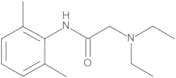
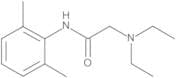
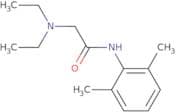
Lidocaine, with the CAS number 137-58-6, is a local anesthetic and antiarrhythmic agent commonly used in medical settings. It is classified as an amide-type anesthetic, characterized by its ability to block nerve conduction by inhibiting sodium ion influx through voltage-gated sodium channels. Lidocaine is typically presented as a white crystalline powder, soluble in water and alcohol, and has a pKa value that allows it to exist in both ionized and non-ionized forms, which is crucial for its effectiveness in various pH environments. Its molecular formula is C14H22N2O, and it has a relatively low molecular weight. Lidocaine is often used in various formulations, including topical gels, injectable solutions, and patches, making it versatile for procedures ranging from dental work to minor surgical interventions. Additionally, it has a rapid onset of action and a relatively short duration of effect, which can be advantageous in clinical applications. However, care must be taken to monitor for potential side effects, including allergic reactions or systemic toxicity, especially with higher doses.
Formula:C14H14O3S
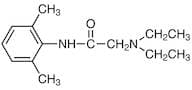
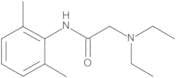
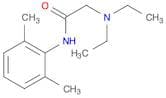
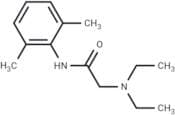
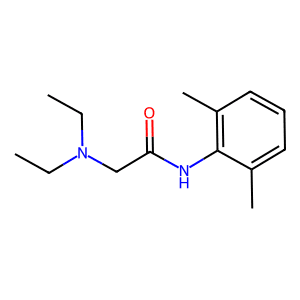
InChI:InChI=1/C14H22N2O/c1-5-16(6-2)10-13(17)15-14-11(3)8-7-9-12(14)4/h7-9H,5-6,10H2,1-4H3,(H,15,17)/p+1
InChI key:InChIKey=NNJVILVZKWQKPM-UHFFFAOYSA-N
SMILES:N(C(CN(CC)CC)=O)C1=C(C)C=CC=C1C
Synonyms:- 2',6'-Acetoxylidide, 2-(diethylamino)-
- 2-(Diethylamino)-2',6'-acetoxylidide
- 2-(Diethylamino)-N-(2,6-dimethylphenyl)acetamide
- 2-Diethylamino-2,6'-acetoxylidide
- 2′,6′-Acetoxylidide, 2-(diethylamino)-
- Anbesol
- Anestacon
- Aritmal
- Cuivasil
- Dalcaine
- Duncaine
- ELA-Max
- Esracaine
- Isicaina
- Isicaine
- Jetocaine
- LMX
- Leostesin
- Lida-Mantle
- LidoPosterine
- Lidocadren
- Lidocain
- Lidocaina
- Lidocaine
- Lidoderm
- Lignocaine
- Linisol
- Maricaine
- Medicaine
- Nsc 40030
- Penles
- Remicaine
- Rucaina
- Solarcaine
- Solcain
- Trachisan
- Versatis
- Xilina
- Xybrex
- Xycaine
- Xylestesin
- Xyline
- Xylocain
- Xylocaine
- Xylocitin
- Xylovet
- α-Diethylamino-2,6-acetoxylidide
- Lidocaine base
- 2-diethylaminoacet-2,6-xylidide
- Acetamide, 2-(diethylamino)-N-(2,6-dimethylphenyl)-
- N-(2,6-dimethylphenyl)-N~2~,N~2~-diethylglycinamide
- 2-[(2,6-dimethylphenyl)amino]-N,N-diethyl-2-oxoethanaminium
- 6’-acetoxylidide,2-(diethylamino)-2
- alpha-Diethylamino-2,6-dimethylacetanilide
- LIDOCAINE-D6
- 4,4'-DIMETHOXY DIPHENYL SULFOXIDE
- alpha-Diethylaminoaceto-2,6-xylidide
- alpha-diethylamino-2,6-acetoxylidide
- Broncaine
- Cappicaine
- Cito optadren
- 2-(diethylamino)-n-(2,6-dimethylphenyl)-acetamid
- alfa-Dietilamino-2,6-dimetilacetanilide
- See more synonyms
Sort by
Purity (%)
0
100
|
0
|
50
|
90
|
95
|
100
Found 20 products.
Lidocaine
CAS:Formula:C14H22N2OPurity:>99.0%(T)(HPLC)Color and Shape:White to Almost white powder to crystalMolecular weight:234.34LIDOCAINE CRS
CAS:LIDOCAINE CRSFormula:C14H22N2OColor and Shape:Crystalline Powder. White. Powder.Molecular weight:234.3373Lidocaine
CAS:LidocaineFormula:C14H22N2OPurity:100.0%Color and Shape:White To Off-WhiteMolecular weight:234.17321Lidocaine
CAS:Aromatic cyclic amides (including cyclic carbamates) and their derivatives; salts thereofFormula:C14H22N2OColor and Shape:White Off-White Crystalline PowderMolecular weight:234.342-(Diethylamino)-N-(2,6-dimethylphenyl)acetamide
CAS:Formula:C14H22N2OPurity:98%Color and Shape:SolidMolecular weight:234.3373Lidocaine
CAS:Lidocaine, an amide local anesthetic, reduces pain and inflammation by dampening ICAM-1, cytokines, and neutrophil influx.Formula:C14H22N2OPurity:99.95% - >99.99%Color and Shape:Needles From Benzene Or Alcohol SolidMolecular weight:234.34Lidocaine
CAS:Formula:C14H22N2OPurity:≤ 0.1%Color and Shape:White crystalline powderMolecular weight:234.34Lidocaine
CAS:Lidocaine is a local anesthetic drug that blocks the transmission of nerve impulses, which prevents pain in the area where it is applied. Lidocaine is used to treat many different types of pain and it has been shown to be effective in reducing systolic pressure. Lidocaine may also be used as a vasopressor agent or to maintain blood pressure during surgery. The use of lidocaine is contraindicated in cases of cardiac arrhythmia, myocardial infarction, or congestive heart failure. Lidocaine can cause neuronal death at high concentrations and various combinations have been developed to reduce this risk. Lidocaine topical preparations are available for nasal administration and can be used as an adjunct therapy for chronic rhinosinusitis with nasal polyps. Lidocaine has been shown to inhibit toll-like receptor 4 (TLR4) signaling pathways in vivo models, which may contribute to its ability to suppress the developmentFormula:C14H22N2OPurity:Min. 95%Color and Shape:PowderMolecular weight:234.34 g/mol