CAS 137017-45-9
:Sort by
Purity (%)
0
100
|
0
|
50
|
90
|
95
|
100
Found 6 products.
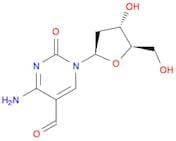
4-Amino-1-((2R,4S,5R)-4-hydroxy-5-(hydroxymethyl)tetrahydrofuran-2-yl)-2-oxo-1,2-dihydropyrimidine-5-carbaldehyde
CAS:4-Amino-1-((2R,4S,5R)-4-hydroxy-5-(hydroxymethyl)tetrahydrofuran-2-yl)-2-oxo-1,2-dihydropyrimidine-5-carbaldehydePurity:98%Molecular weight:255.23g/mol2''-Deoxy-5-formylcytidine
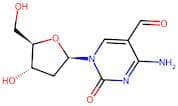
CAS:Formula:C10H13N3O5Purity:≥ 98.0%Color and Shape:White to off-white solidMolecular weight:255.232'-Deoxy-5-formyl-cytidine
CAS:Controlled ProductApplications 2'-Deoxy-5-formyl-cytidine is a nucleotide derivative found in embryonic stem cell DNA.
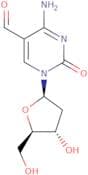
References Pfaffeneder, T., et al.: Angew. Chem. Int. Edit., 50, 7008-7012 (2011)Formula:C10H13N3O5Color and Shape:NeatMolecular weight:255.2272'-Deoxy-5-formylcytidine
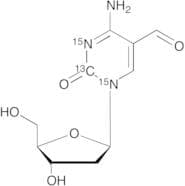
CAS:2'-Deoxy-5-formylcytidine is a nucleoside analog that is used as a chemotherapeutic agent. It is cytotoxic to cells by binding to DNA and preventing the synthesis of DNA, RNA, and protein. The drug has been shown to induce cellular senescence in human fibroblasts, which can be reversed by the addition of deuterium. 2'-Deoxy-5-formylcytidine also inhibits the production of reactive oxygen species (ROS) by inducing the expression of antioxidant enzymes such as superoxide dismutase 2 and glutathione peroxidase 1. The oxidation products are misincorporated into DNA strands, leading to intramolecular hydrogen bonds with cytosine bases. These modifications lead to denaturation of DNA and inhibition of transcription and replication. 2'-Deoxy-5-formylcytidine also interacts with oligodeoxynucleotides, which leads to misincFormula:C10H13N3O5Purity:Min. 97 Area-%Color and Shape:White PowderMolecular weight:255.23 g/mol2'-Deoxy-5-formyl-cytidine-1,3-15N2,2-13C
CAS:Controlled ProductFormula:CC9H1315N2NO5Color and Shape:NeatMolecular weight:258.207