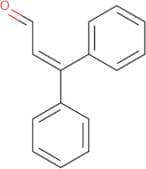
CAS 13702-35-7
:beta-phenylcinnamaldehyde
Description:
Beta-phenylcinnamaldehyde, with the CAS number 13702-35-7, is an organic compound characterized by its structure, which features a phenyl group attached to a cinnamaldehyde moiety. This compound typically appears as a yellowish to brownish liquid with a distinctive aromatic odor. It is known for its role in organic synthesis and as a potential flavoring agent or fragrance component due to its pleasant scent. Beta-phenylcinnamaldehyde exhibits moderate solubility in organic solvents, while its solubility in water is limited. The compound is also recognized for its potential biological activities, including antimicrobial and antioxidant properties, making it of interest in various fields such as pharmaceuticals and cosmetics. Additionally, it may undergo typical reactions associated with aldehydes, such as oxidation and condensation, which can be leveraged in synthetic chemistry. Safety data indicates that, like many organic compounds, it should be handled with care, as it may cause irritation upon contact with skin or eyes.
Formula:C15H12O
InChI:InChI=1/C15H12O/c16-11-5-7-13-6-4-10-15(12-13)14-8-2-1-3-9-14/h1-12H/b7-5+
Synonyms:- Benzeneacetaldehyde, alpha-(phenylmethylene)-
- (2E)-3-biphenyl-3-ylprop-2-enal
Sort by
Purity (%)
0
100
|
0
|
50
|
90
|
95
|
100
Found 1 products.
3,3-Diphenylacrylaldehyde
CAS:3,3-Diphenylacrylaldehyde is an organometallic compound that is used as a precursor to produce metal complexes. It has been shown to have a cytotoxic effect on cancer cells in vitro and in vivo. 3,3-Diphenylacrylaldehyde has also been shown to inhibit the growth of bacteria by binding to the phosphorous acid groups of bacterial cell walls. The antibacterial activity of 3,3-Diphenylacrylaldehyde is dependent on the concentration of substrate. At low concentrations, this chemical inhibits bacterial growth by competing with other substrates for binding sites on the cell wall. At higher concentrations, 3,3-Diphenylacrylaldehyde inhibits bacterial growth by inhibiting protein synthesis and causing cell death.Formula:C15H12OPurity:Min. 95%Color and Shape:Beige PowderMolecular weight:208.26 g/mol