CAS 137160-11-3
:Guanidine,N-(3-ethylphenyl)-N-methyl-N'-1-naphthalenyl-, hydrochloride (1:1)
Description:
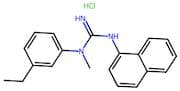
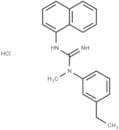
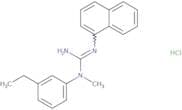
Guanidine, N-(3-ethylphenyl)-N-methyl-N'-1-naphthalenyl-, hydrochloride (1:1) is a chemical compound characterized by its guanidine structure, which features a central carbon atom bonded to three nitrogen atoms. This specific guanidine derivative includes an ethylphenyl group and a naphthalenyl moiety, contributing to its unique properties and potential applications. As a hydrochloride salt, it is typically more soluble in water compared to its free base form, enhancing its usability in various chemical and biological contexts. The compound may exhibit biological activity, making it of interest in pharmaceutical research, particularly in the development of therapeutic agents. Its molecular structure suggests potential interactions with biological targets, which could lead to various pharmacological effects. Safety and handling precautions should be observed, as with many organic compounds, due to potential toxicity or reactivity. Overall, this compound represents a specific class of guanidine derivatives with potential applications in medicinal chemistry and related fields.
Formula:C20H21N3ClH
InChI:InChI:1S/C20H21N3.ClH/c1-3-15-8-6-11-17(14-15)23(2)20(21)22-19-13-7-10-16-9-4-5-12-18(16)19;/h4-14H,3H2,1-2H3,(H2,21,22);1H
Synonyms:- Guanidine,N-(3-ethylphenyl)-N-methyl-N'-1-naphthalenyl-, monohydrochloride (9CI)
- Aptiganel hydrochloride
- Cns 1102
- Cerestat
Sort by
Purity (%)
0
100
|
0
|
50
|
90
|
95
|
100
Found 3 products.
Aptiganel hydrochloride
CAS:Aptiganel hydrochloride(Cerestat) is the salt form of Aptiganel.Aptiganel is a non-competitive NMDA antagonist with neuroprotective effects used in the treatment of stroke and focal cerebral ischemia.Formula:C20H22ClN3Purity:99.89%Color and Shape:SolidMolecular weight:339.86Cerestat
CAS:<p>Cerestat is a drug that has been shown to be effective in the treatment of bowel disease. It is a glutamate receptor modulator and it has been found to have an effect on human pharmacokinetics. Cerestat also inhibits the release of inflammatory cytokines by inhibiting ion channels, such as cation channels and ATP-sensitive potassium channels. This drug has been shown to inhibit glutamate-induced excitotoxicity in mice, which is the process by which nerve cells are killed or damaged by excessive stimulation by the neurotransmitter glutamate. Cerestat has also been shown to have side-effects, such as an increased risk of seizures, dizziness, and nausea.</p>Formula:C20H22ClN3Purity:Min. 95%Molecular weight:339.9 g/mol