CAS 137629-36-8
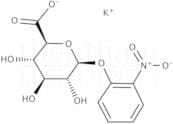
:O-nitrophenyl-B-D-glucuronide potassium
Description:
O-nitrophenyl-β-D-glucuronide potassium, with the CAS number 137629-36-8, is a chemical compound commonly used as a substrate in enzymatic assays, particularly for the detection of β-glucuronidase activity. This compound features a nitrophenyl group, which provides a chromogenic response upon hydrolysis, making it useful for colorimetric assays. The β-D-glucuronide moiety is a glucuronic acid derivative, which is significant in biological systems for the conjugation and detoxification of various substances. The potassium salt form enhances its solubility in aqueous solutions, facilitating its use in laboratory settings. The compound is typically stable under standard laboratory conditions but should be stored properly to prevent degradation. Its applications extend to biochemical research, particularly in studies involving drug metabolism and the activity of glucuronidating enzymes. Safety data sheets should be consulted for handling and disposal guidelines, as with any chemical substance.
Formula:C12H12KNO9
Sort by
Purity (%)
0
100
|
0
|
50
|
90
|
95
|
100
Found 4 products.
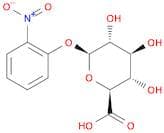
(2S,3S,4S,5R,6S)-3,4,5-Trihydroxy-6-(2-nitrophenoxy)tetrahydro-2H-pyran-2-carboxylic acid
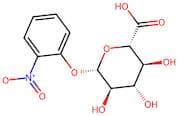
CAS:Formula:C12H13NO9Color and Shape:SolidMolecular weight:315.23292-Nitrophenyl β-D-glucuronide
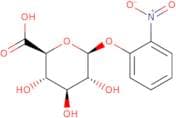
CAS:2-Nitrophenyl β-D-glucuronidePurity:>99%Molecular weight:315.23g/mol2-Nitrophenyl b-D-glucuronide
CAS:2-Nitrophenyl-b-D-glucuronide is a chromogenic substrate used to detect the activity of beta-glucuronidase in various biological samples. Upon hydrolysis by the enzyme, the substrate releases 2-nitrophenol, which can be spectrophotometrically measured at 405 nm. The substrate is commonly used in clinical assays to evaluate liver and kidney function, as well as in drug metabolism studies. It is also used in environmental monitoring to assess the presence of microbial activity in soil and water samples. Overall, 2-Nitrophenyl-b-D-glucuronide is a widely used substrate with excellent sensitivity and specificity, making it a valuable tool in enzymology research and diagnostic testing.Purity:Min. 95%Color and Shape:Off-white solid.Molecular weight:315.23 g/mol