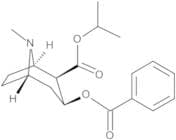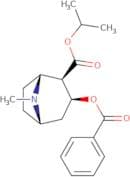
CAS 137819-55-7
:BENZOYLECGONINE ISOPROPYL ESTER
Description:
Benzoylecgonine isopropyl ester, with the CAS number 137819-55-7, is a synthetic compound derived from benzoylecgonine, which is a major metabolite of cocaine. This substance is characterized by its ester functional group, which typically influences its solubility and reactivity. As an ester, it may exhibit properties such as volatility and the potential for hydrolysis in the presence of water or under acidic or basic conditions. The presence of the isopropyl group suggests that it may have unique steric and electronic properties compared to other esters. In terms of applications, compounds like benzoylecgonine isopropyl ester may be of interest in pharmacological research or forensic science, particularly in studies related to drug metabolism and detection. However, specific data regarding its toxicity, stability, and environmental impact would require further investigation. Overall, while it shares structural similarities with other esters, its specific characteristics and behaviors would depend on its molecular interactions and the context of its use.
Formula:C19H25NO4
Synonyms:- Isopropyl Cocaine
- Benzoylecgonineisopropylester,1.0Mg/Mlinacetonitrile
Sort by
Purity (%)
0
100
|
0
|
50
|
90
|
95
|
100
Found 2 products.
Benzoyl Ecgonine Isopropyl Ester
CAS:Controlled ProductApplications A 2β-substituted analog of cocaine as potential cocaine antagonist.Controlled substance.
References Arthur, C., et al.: Anal. Chem., 62, 2145 (1990), Lewin, A.H., et al.: J. Med. Chem., 35, 135 (1992), Lloyd, J., et al.: J. Forensic Sci., 48, 130 (2003),Formula:C19H25NO4Color and Shape:NeatMolecular weight:331.41Benzoyl ecgonine isopropyl ester
CAS:Controlled ProductBenzoyl ecgonine isopropyl ester is an analytical toxicology procedure that is used to identify the presence of cocaine in biological samples. The sample preparation involves homogenizing the sample, extracting it with solvents, and evaporating the solvent. Benzoyl ecgonine isopropyl ester is then incubated at room temperature for 15 minutes before adding a solution of hydrochloric acid and potassium dichromate. A color change from yellow to orange indicates the presence of cocaine. This test can be performed on either whole blood or plasma samples and can also be used to detect other drugs such as amphetamines, barbiturates, benzodiazepines, and opiates.Formula:C19H25NO4Purity:Min. 95%Molecular weight:331.41 g/mol