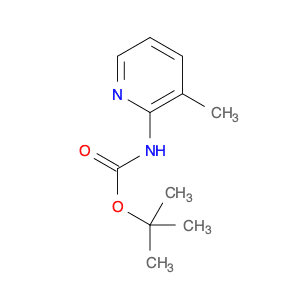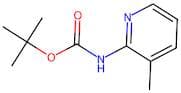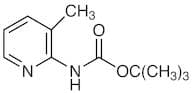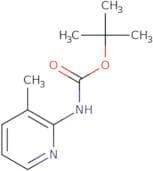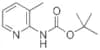
CAS 138343-75-6
:2-(BOC-AMINO)-3-METHYLPYRIDINE
- Buttpark 92\50-22
- 2-(N-Boc-Amino)-3-Methylpyridine, 97%
- Carbamic acid, (3-methyl-2-pyridinyl)-, 1,1-dimethylethyl ester (9CI)
- (3-Methylpyridine-2-Yl)Carbamic Acid Tert-Butyl Ester
- Carbamic acid, (3-methyl-2-pyridinyl)-
- Tert-Butyl (3-Methylpyridin-2-Yl)Carbamate
Carbamic acid, N-(3-methyl-2-pyridinyl)-, 1,1-dimethylethyl ester
CAS:Formula:C11H16N2O2Purity:95%Color and Shape:SolidMolecular weight:208.25692-(N-Boc-Amino)-3-methylpyridine
CAS:2-(N-Boc-Amino)-3-methylpyridinePurity:99%Molecular weight:208.26g/moltert-Butyl (3-Methylpyridin-2-yl)carbamate
CAS:Formula:C11H16N2O2Purity:>98.0%(HPLC)Color and Shape:White to Almost white powder to crystalMolecular weight:208.262-(Boc-amino)-3-methylpyridine
CAS:2-(Boc-amino)-3-methylpyridine is a cytotoxic agent that has been shown to inhibit the proliferation of cancer cells. It is a potent cytotoxic agent that can be used to treat cancer. 2-(Boc-amino)-3-methylpyridine inhibits the growth of cancer cells by inhibiting the activity of B-Raf, a protein involved in cell proliferation and apoptosis. The anticancer properties are due to its ability to inhibit protein synthesis in cells by inhibiting the enzyme carbinolamine N-methyltransferase, which is required for the synthesis of methionine. 2-(Boc-amino)-3-methylpyridine also inhibits DNA and RNA synthesis in cells. This drug has been shown to have antiangiogenic effects, which may be due to its ability to inhibit vascular endothelial growth factor (VEGF) production.
END>Formula:C11H16N2O2Purity:Min. 95%Color and Shape:PowderMolecular weight:208.26 g/mol2-(N-Boc-Amino)-3-methylpyridine
CAS:Formula:C11H16N2O2Purity:95%Color and Shape:SolidMolecular weight:208.261