CAS 138514-97-3
:L-Tryptophan, 7-fluoro-
Description:
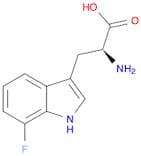
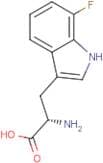
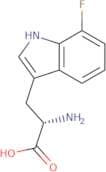
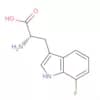
L-Tryptophan, 7-fluoro- is a fluorinated derivative of the essential amino acid L-Tryptophan, which plays a crucial role in protein synthesis and serves as a precursor for neurotransmitters such as serotonin. The presence of a fluorine atom at the 7-position of the indole ring modifies its chemical properties, potentially influencing its biological activity and interactions. This compound is characterized by its molecular structure, which includes an indole ring, an amino group, and a carboxylic acid group, typical of amino acids. The introduction of fluorine can enhance lipophilicity and alter the compound's pharmacokinetics, making it of interest in medicinal chemistry and drug design. L-Tryptophan, 7-fluoro- may exhibit unique properties compared to its non-fluorinated counterpart, including changes in solubility, stability, and reactivity. Its CAS number, 138514-97-3, allows for precise identification in chemical databases and literature. Overall, this compound represents a valuable subject for research in both biochemical and pharmaceutical contexts.
Formula:C11H11FN2O2
Synonyms:- 7-Fluoro-L-tryptophan
Sort by
Purity (%)
0
100
|
0
|
50
|
90
|
95
|
100
Found 4 products.
L-Tryptophan, 7-fluoro-
CAS:Formula:C11H11FN2O2Purity:95%Color and Shape:SolidMolecular weight:222.21567-Fluoro-L-tryptophan
CAS:7-Fluoro-L-tryptophanFormula:C11H11FN2O2Purity:95%Color and Shape: white to off-white solidMolecular weight:222.22g/mol7-Fluoro-L-tryptophan
CAS:7-Fluoro-L-tryptophan is a fluorinated analog of L-tryptophan. Fluorine substitution for hydrogen in the phenyl ring of the molecule increases the photophysical, biological and fluorogenic properties of 7-fluoro-L-tryptophan. It has been shown to have higher potency than L-tryptophan in both clinical and preclinical studies and can be used as a positron emission tomography radiotracer. The method of synthesis involves reacting 7-fluoroindole with tertiary amines. This synthetic procedure is more difficult than that for L-tryptophan, but yields a more pure product. The subunits are synthesized by recombinant microbial fermentation using Escherichia coli bacteria strains such as BL21 (DE3) pLysS or BL21 (DE3) pLysE.
Formula:C11H11FN2O2Purity:Min. 95%Molecular weight:222.22 g/mol