CAS 1390-65-4
:Carmine
- B Rose Liquid
- Carmine red
- Cc 1000Ws
- Cochineal And Carminic Acid
- Hydrated Alu-Minium Chelate Of Carminic Acid
- Nacarat Cochineal
- Natural Red 4
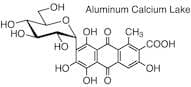
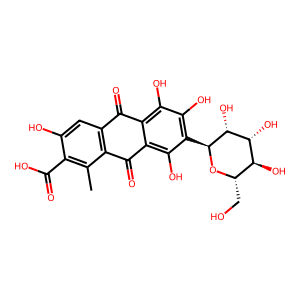
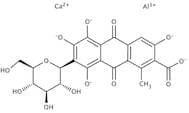
- calcium 6-carboxy-1-[[6-carboxy-4,7-dihydroxy-5-methyl-2-oxido-9,10-dioxo-3-[(2R,3S,4S,5S)-3,4,5-trihydroxy-6-(hydroxymethyl)tetrahydropyran-2-yl]oxy-1-anthryl]oxy-hydroxy-alumanyl]oxy-4,7-dihydroxy-5-methyl-9,10-dioxo-3-[(2R,3S,4S,5S)-3,4,5-trihydroxy-6-(hydroxymethyl)tetrahydropyran-2-yl]oxy-anthracen-2-olate trihydrate
- MeSH ID: D002329
- Carmine
Carmine (C.I. 75470)
CAS:Purity:≥ 42.0% (Carminic acid)Color and Shape:Red to dark purple powderMolecular weight:-Carmine
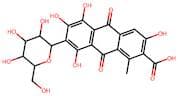
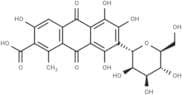
CAS:Carmine (Carmine red) is an azo dye extracted from dried Dactylopius coccus var. Costa and is a coloring agent added to foods.Formula:C22H20O13Purity:85%Color and Shape:SolidMolecular weight:492.39Carmine (C.I. 75470) (Technical Grade)
CAS:Controlled ProductApplications Carmine (C.I. 75470) (CAS# 1390-65-4) is an insect-based food dye. Carmine has excellent heat and light stability, but is a known human allergen. Dyes and metabolites.
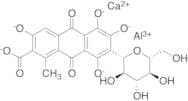
References Dufosse, L., et al.: Journal of Food Composition and Analysis, 69, 156 (2018); Mueller-Maatsch, J.; et al.: Woodhead Publishing Series in Food Science, Technology and Nutrition, 295, 385 (2016)Formula:C22H15AlCaO13Color and Shape:NeatMolecular weight:554.41Carmine
CAS:Color and Shape:Red to dark red to red-purple, Powder, Clear, Red to dark red to red-purpleCarmine
CAS:Carmine is a red pigment that is extracted from the female cochineal insect (Dactylopius coccus). It has been widely used in food, cosmetics, and medicine. Carmine can be detected by fluorescence probe and signal peptide as it binds to the mitochondrial membrane potential. This binding alters the mitochondrial membrane potential and leads to an increase in redox potentials. Carmine can be used for wastewater treatment because of its high resistance to biodegradation. The process of extracting carmine from the female cochineal insect is not genotoxic because it does not cause mutations or chromosomal aberrations in human serum.
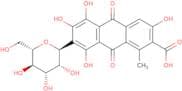
Formula:C22H20O13Purity:85%MinMolecular weight:492.39 g/mol