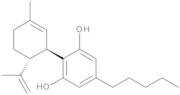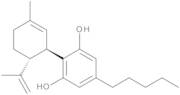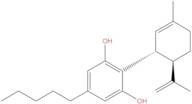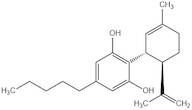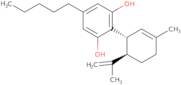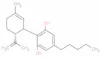
CAS 13956-29-1
:Cannabidiol
Description:
Cannabidiol (CBD) is a non-psychoactive compound found in the Cannabis sativa plant, recognized for its potential therapeutic properties. It is one of over a hundred cannabinoids identified in cannabis and is primarily extracted from hemp varieties. CBD is known for its interaction with the endocannabinoid system, which plays a crucial role in regulating various physiological processes. The substance is characterized by its relatively low toxicity and a favorable safety profile, making it a subject of interest in medical research. CBD exhibits anti-inflammatory, analgesic, anxiolytic, and neuroprotective effects, which have led to its exploration in treating conditions such as epilepsy, anxiety disorders, and chronic pain. It is typically available in various forms, including oils, capsules, and topical applications. The compound has gained significant attention in both the pharmaceutical and wellness industries, although regulatory frameworks vary by region. Its legal status is often contingent on the THC content and the source from which it is derived, emphasizing the importance of understanding local laws regarding its use and distribution.
Formula:C21H30O2
InChI:InChI=1S/C21H30O2/c1-5-6-7-8-16-12-19(22)21(20(23)13-16)18-11-15(4)9-10-17(18)14(2)3/h11-13,17-18,22-23H,2,5-10H2,1,3-4H3/t17-,18+/m0/s1
InChI key:InChIKey=QHMBSVQNZZTUGM-ZWKOTPCHSA-N
SMILES:C(C)(=C)[C@H]1[C@@H](C=C(C)CC1)C2=C(O)C=C(CCCCC)C=C2O
Synonyms:- (-)-trans-2-p-Mentha-1,8-dien-3-yl-5-pentylresorcinol
- 1,3-Benzenediol, 2-(3-methyl-6-(1-methylethenyl)-2-cyclohexen-1-yl)-5-pentyl-, (1R-trans)-
- 1,3-Benzenediol, 2-[(1R,6R)-3-methyl-6-(1-methylethenyl)-2-cyclohexen-1-yl]-5-pentyl-
- 2-[(1R,6R)-3-Methyl-6-(1-methylethenyl)-2-cyclohexen-1-yl]-5-pentyl-1,3-benzenediol
- 2-[(1R,6R)-3-methyl-6-(prop-1-en-2-yl)cyclohex-2-en-1-yl]-5-pentylbenzene-1,3-diol
- 2-[(6R)-3-methyl-6-(prop-1-en-2-yl)cyclohex-2-en-1-yl]-5-pentylbenzene-1,3-diol
- CBD
- Cannabidiol
- Epidiolex
- Epidyolex
- Gwp 42003P
- Resorcinol, 2-p-mentha-1,8-dien-3-yl-5-pentyl-, (-)-(E)-
- Resorcinol, 2-p-mentha-1,8-dien-3-yl-5-pentyl-, trans-(-)-
- Δ1(2)-trans-Cannabidiol
- See more synonyms
Filter by
Purity percentage
0
100
|
0
|
50
|
90
|
95
|
100
- Lower prices
- Higher prices
- Lower purities
- Higher purities
- Faster estimated delivery
Cannabidiol, 1mg/ml in Methanol
CAS:Controlled ProductFormula:C21H30O2Color and Shape:Single SolutionMolecular weight:314.46(-)-Cannabidiol 1.0 mg/ml in Methanol
CAS:Formula:C21H30O2Color and Shape:ColourlessMolecular weight:314.46Cannabinoids Neutrals Mixture 181 1000 µg/mL in Acetonitrile
CAS:Controlled ProductColor and Shape:MixtureCannabinoids Mixture 255 500 µg/mL in Acetonitrile
CAS:Controlled Product- 1244-58-2
- 13956-29-1
- 1972-08-3
- 20675-51-8
- 23978-85-0
- 24274-48-4
- 25555-57-1
- 25654-31-3
- 31262-37-0
- 521-35-7
- 5957-75-5
Color and Shape:MixtureCannabidiol
CAS:PolyphenolFormula:C21H30O2Purity:≥ 95.0 % (HPLC)Color and Shape:PowderMolecular weight:314.46Cannabidiol
CAS:Controlled ProductCannabidiol is a non-psychoactive phytocannabinoid with low affinity for the CB1 and CB2 receptor (Ki = 4900 nM and 4200 nM, respectively) (Thomas, 2007). Despite its low affinity, it is able to antagonize cannabinoid CB1 and CB2 receptors at low nanomolar range in murine brain cells and Chinese hamster ovary transfected cells (Thomas, 2007). It has been demonstrated to inhibit immune cell chemotaxis and reducing inflammation processes by acting as an inverse agonist at the CB2 receptor (Lunn, 2006). In rodent in vivo models, cannabidiol encourages neurogenesis and prevents as well as proof of principle reversal of cognitive disease development in AlzheimerÂŽs disease rodent models (Watt and Karl, 2017).Formula:C21H30O2Purity:Min. 98 Area-%Color and Shape:PowderMolecular weight:314.46 g/molRef: 3D-FC19666
Discontinued product