CAS 140430-55-3
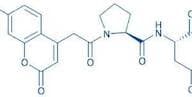
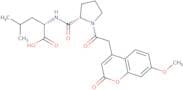
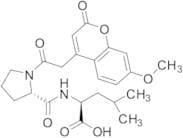
:7-methoxycoumarin-4-acetyl-pro-leu
Description:
7-Methoxycoumarin-4-acetyl-pro-leu, identified by its CAS number 140430-55-3, is a synthetic compound that belongs to the coumarin family, which is known for its diverse biological activities. This substance features a coumarin backbone, characterized by a benzopyrone structure, which is often associated with fluorescence and potential therapeutic properties. The presence of a methoxy group at the 7-position enhances its solubility and may influence its biological interactions. The acetyl group at the 4-position contributes to its reactivity and potential for further chemical modifications. Additionally, the proline-leucine dipeptide moiety suggests that this compound may exhibit specific biological activities, possibly related to peptide interactions or enzyme inhibition. Coumarins are often studied for their antioxidant, anti-inflammatory, and antimicrobial properties, making 7-methoxycoumarin-4-acetyl-pro-leu of interest in pharmaceutical research. Overall, this compound's unique structural features may contribute to its potential applications in medicinal chemistry and biochemistry.
Formula:C23H28N2O7
Synonyms:- MMP-2/MMP-7 Control, Fluorogenic
- Mca-Pro-Leu-OH
Sort by
Purity (%)
0
100
|
0
|
50
|
90
|
95
|
100
Found 3 products.
Mca-Pro-Leu-OH
CAS:Standard compound for enzyme assays using Mca-containing FRET substrates. Excitation at 328 nm, emission at 393 nm.Formula:C23H28N2O7Purity:99.7%Color and Shape:White PowderMolecular weight:444.48Mca-Pro-Leu-OH
CAS:Mca-Pro-Leu-OH is a monoclonal antibody that recognizes the antigen staphylococcus. It is useful for the diagnosis of postoperative infections, nephrology dialysis, and in renal transplantation to prevent graft rejection. It has been used as an immunofluorescent stain in human chorionic gonadotropin (hCG) and follicle stimulating hormone (FSH) studies. Mca-Pro-Leu-OH is a mouse monoclonal antibody that reacts with human chorionic gonadotropin (hCG). The specificity of this antibody has been shown to be very high since it does not react with other proteins found in nature such as follicle stimulating hormone (FSH).Formula:C23H28N2O7Purity:Min. 95%Color and Shape:PowderMolecular weight:444.48 g/mol