CAS 14097-24-6
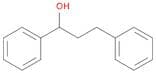
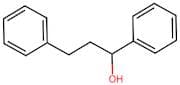
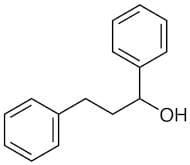
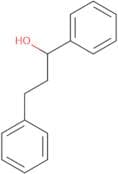
:1,3-diphenylpropan-1-ol
Description:
1,3-Diphenylpropan-1-ol, with the CAS number 14097-24-6, is an organic compound characterized by its structure, which features a propanol backbone with two phenyl groups attached to the first and third carbon atoms. This compound is typically a colorless to pale yellow liquid or solid, depending on its purity and temperature. It exhibits moderate solubility in organic solvents, while being less soluble in water due to its hydrophobic phenyl groups. The presence of the hydroxyl (-OH) functional group imparts some polar characteristics, allowing for hydrogen bonding, which can influence its reactivity and interactions with other substances. 1,3-Diphenylpropan-1-ol can participate in various chemical reactions, including oxidation and esterification, making it of interest in organic synthesis and potentially in pharmaceutical applications. Its physical properties, such as boiling point and melting point, are influenced by the molecular weight and the arrangement of its substituents, which can also affect its stability and reactivity under different conditions.
Formula:C15H16O
InChI:InChI=1/C15H16O/c16-15(14-9-5-2-6-10-14)12-11-13-7-3-1-4-8-13/h1-10,15-16H,11-12H2
SMILES:c1ccc(cc1)CCC(c1ccccc1)O
Sort by
Purity (%)
0
100
|
0
|
50
|
90
|
95
|
100
Found 5 products.
1,3-Diphenylpropan-1-ol
CAS:Formula:C15H16OPurity:95.0%Color and Shape:LiquidMolecular weight:212.28691,3-Diphenylpropan-1-ol
CAS:Formula:C15H16OPurity:>95.0%(GC)Color and Shape:White to Light yellow powder to lumpMolecular weight:212.291,3-Diphenylpropan-1-ol
CAS:1,3-Diphenylpropan-1-ol is a benzyl alcohol derivative. It is a white solid that can be used as a dehydrogenation agent for the synthesis of chalcone derivatives. It has been used as an intermediate in the synthesis of other organic compounds and has been detected in the reaction solution by thin layer chromatography. 1,3-Diphenylpropan-1-ol is also involved in the catalytic transfer of acetylacetonate to benzaldehyde or benzoic acid. The resulting anion can be neutralized with hydrochloric acid to produce benzyl alcohol or reacted with sodium hydroxide to produce dihydrochalcone.Formula:C15H16OPurity:Min. 95%Molecular weight:212.29 g/mol