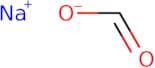
CAS 141-53-7
:Sodium formate
Description:
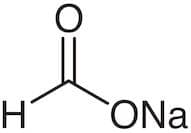
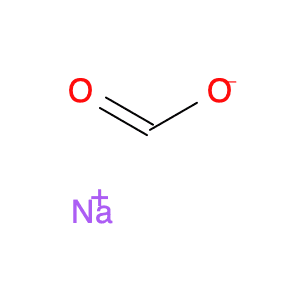
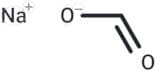
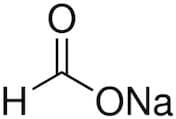
Sodium formate, with the chemical formula HCOONa and CAS number 141-53-7, is the sodium salt of formic acid. It appears as a white, hygroscopic crystalline powder that is soluble in water and has a slightly salty taste. Sodium formate is commonly used in various applications, including as a buffering agent in biochemical research, a preservative in the food industry, and a de-icing agent for roads. It can also serve as a source of formic acid in chemical synthesis. The substance is generally considered to be non-toxic, but it should be handled with care to avoid irritation to the skin and eyes. In terms of its chemical properties, sodium formate can undergo thermal decomposition at elevated temperatures, releasing gases such as carbon dioxide. Its ability to act as a reducing agent makes it useful in certain industrial processes. Overall, sodium formate is a versatile compound with significant utility across multiple fields, including chemistry, food science, and environmental applications.
Formula:CH2O2·Na
InChI:InChI=1S/CH2O2.Na/c2-1-3;/h1H,(H,2,3);
InChI key:InChIKey=ZDPALFHDPFYJDY-UHFFFAOYSA-N
SMILES:C(O)=O.[Na]
Synonyms:- Formate, Sodium
- Formiate de sodium
- Formiato De Sodio
- Formic acid, sodium salt (1:1)
- NA-Amasil
- Natriumformiat
- Natriumformiat, Techn.
- Sodium Formate
- Formic acid, sodium salt
Sort by
Purity (%)
0
100
|
0
|
50
|
90
|
95
|
100
Found 12 products.
Sodium Formate
CAS:Formula:CHNaO2Purity:>97.0%(T)Color and Shape:White to Almost white powder to crystalMolecular weight:68.01Sodium formate, ACS, 99.0% min
CAS:Reducing agent, buffering agent, complexing agent, Noble metal precipitantSodium formate is used in analytical chemistry to precipitate noble metals. It is used for tanning leather, for dyeing and printing fabrics. It acts as an electroplating agent, an acidulant in the textile industry, a reducingFormula:CHNaO2Purity:99.0%Molecular weight:68.01Sodium formate, 98%
CAS:Sodium formate is used in analytical chemistry to precipitate noble metals. It is used for tanning leather, for dyeing and printing fabrics. It acts as an electroplating agent, an acidulant in the textile industry, a reducing agent, a mordant, a complexing agent. Further, it is used in photographicFormula:CHNaO2Purity:98%Color and Shape:White or pale cream, Crystals or powder or crystalline powderMolecular weight:68.01Formic acid, sodium salt (1:1)
CAS:Formula:CHNaO2Purity:98%Color and Shape:SolidMolecular weight:68.0072Sodium formate
CAS:Formula:NaOOCHPurity:≥ 97.0% (dried basis)Color and Shape:White to off-white crystalline poweder or crystalsMolecular weight:68.01Sodium formate
CAS:Sodium formate has antiviral and antifungal properties, can inhibit carbonic anhydrase, and can also be used as a biochemical buffer.Formula:CHNaO2Color and Shape:SolidMolecular weight:68.01Sodium Formate
CAS:Formula:CHNaO2Purity:97%Color and Shape:Solid, Crystalline Powder or PowderMolecular weight:68.007Sodium Formate extrapure AR, ACS
CAS:Formula:HCOONaPurity:min. 99%Color and Shape:White, Crystalline powder, Clear, ColourlessMolecular weight:68.01Sodium Formate pure, 98%
CAS:Formula:CHNaO2Purity:min. 98%Color and Shape:White, Crystalline powder, Clear, ColourlessMolecular weight:68.01Formic acid sodium salt
CAS:Formic acid is a carboxylic acid that is found in the form of calcium formate. Formic acid has synergistic effects with many other drugs, including calcium, and it is often used as a model system for studying the effects of various drugs on biological systems. The constant pressure analytical method was developed to determine the concentration of formic acid in blood samples and can be used as an analytical tool for biocompatible polymers. Formic acid has been shown to inhibit bowel disease by inhibiting certain enzymes involved in the disease process. It also has inhibitory properties against complex enzymes such as lipases and proteases. Formic acid undergoes a phase transition from liquid to gas at a temperature of about -76°C (-108°F).
Formula:HCOONaPurity:Min. 95%Color and Shape:White PowderMolecular weight:68.01 g/mol