CAS 14162-88-0
:2-Pyridinecarboxylic acid, 3-hydroxy-6-methyl-
Description:
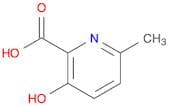
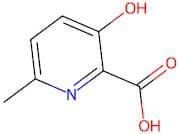
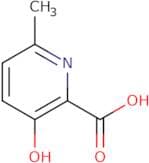
2-Pyridinecarboxylic acid, 3-hydroxy-6-methyl-, also known as 6-methyl-3-hydroxypyridine-2-carboxylic acid, is an organic compound characterized by a pyridine ring substituted with a carboxylic acid group, a hydroxyl group, and a methyl group. This compound typically appears as a solid or crystalline substance and is soluble in polar solvents due to the presence of the carboxylic acid and hydroxyl functional groups. Its molecular structure contributes to its potential applications in pharmaceuticals and agrochemicals, as it may exhibit biological activity. The presence of the hydroxyl group can enhance hydrogen bonding capabilities, influencing its reactivity and interaction with other molecules. Additionally, the methyl group can affect the compound's lipophilicity, impacting its absorption and distribution in biological systems. Overall, 2-Pyridinecarboxylic acid, 3-hydroxy-6-methyl- is of interest in various fields, including medicinal chemistry and material science, due to its unique structural features and potential functional properties.
Formula:C7H7NO3
Sort by
Purity (%)
0
100
|
0
|
50
|
90
|
95
|
100
Found 4 products.
2-Pyridinecarboxylic acid, 3-hydroxy-6-methyl-
CAS:Formula:C7H7NO3Purity:98%Color and Shape:SolidMolecular weight:153.13543-Hydroxy-6-methylpicolinic acid
CAS:3-Hydroxy-6-methylpicolinic acidPurity:98%Molecular weight:153.14g/mol3-Hydroxy-6-methylpicolinic acid
CAS:Formula:C7H7NO3Purity:98%Color and Shape:Liquid, No data available.Molecular weight:153.1373-Hydroxy-6-methylpicolinic acid
CAS:3-Hydroxy-6-methylpicolinic acid is a pyridine derivative, a carboxylic acid and an isomer of picolinic acid. It was first synthesized in 1884 by the French chemist Pierre Paul Emile Leloir. 3-Hydroxy-6-methylpicolinic acid is produced by the ammonolysis of picoline with ammonia or ammonium salts at high pressure and temperature. The product is used as a precursor to other compounds, such as methylpyridines and ethylpyridines. It can also be used to make the cyanogen chloride gas, which has been used as a chemical weapon in World War II.Formula:C7H7NO3Purity:Min. 95%Molecular weight:153.14 g/mol