CAS 141979-19-3
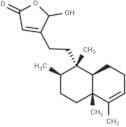
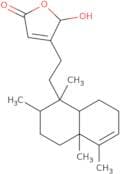
:16-Hydroxycleroda-3,13-dien-15,16-olide
Description:
16-Hydroxycleroda-3,13-dien-15,16-olide, with the CAS number 141979-19-3, is a naturally occurring compound belonging to the clerodane family of diterpenoids. This substance is characterized by its unique bicyclic structure, which includes a lactone functional group and multiple double bonds, contributing to its reactivity and biological activity. It typically exhibits a range of pharmacological properties, including anti-inflammatory and antimicrobial effects, making it of interest in medicinal chemistry and natural product research. The presence of the hydroxyl group at the 16-position enhances its solubility and potential interactions with biological targets. As a natural product, it can be isolated from various plant sources, and its synthesis can also be achieved through organic chemistry techniques. The compound's stability, solubility, and reactivity can vary based on environmental conditions and the presence of other chemical species. Overall, 16-Hydroxycleroda-3,13-dien-15,16-olide represents a significant area of study for its potential applications in pharmaceuticals and natural product chemistry.
Formula:C20H30O3
Synonyms:- 2(5H)-Furanone, 5-hydroxy-4-[2-[(1S,2R,4aR,8aR)-1,2,3,4,4a,7,8,8a-octahydro-1,2,4a,5-tetramethyl-1-naphthalenyl]ethyl]-
- 16-Hydroxycleroda-3,13-dien-15,16-olide
Sort by
Purity (%)
0
100
|
0
|
50
|
90
|
95
|
100
Found 3 products.
16-Hydroxycleroda-3,13-dien-15,16-olide
CAS:16-Hydroxycleroda-3,13-dien-15,16-olide induces autophagy, apoptosis in CML cells, and has anti-inflammatory properties.Formula:C20H30O3Purity:98%Color and Shape:SolidMolecular weight:318.4516-Hydroxycleroda-3,13-dien-15,16-olide
CAS:16-Hydroxycleroda-3,13-dien-15,16-olide is a clerodane diterpene lactone, which is a naturally occurring compound extracted from the leaves of Polyalthia longifolia, a plant known for its diverse pharmacological applications. This compound exhibits a unique mode of action, disrupting cellular processes in microbial organisms. It has been studied for its potential antimicrobial and anti-inflammatory activities, working by interfering with the signaling pathways and structural integrity of pathogens.
Formula:C20H30O3Purity:Min. 95%Molecular weight:318.4 g/mol