

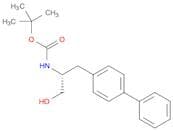
![(R)-tert-butyl (1-([1,1'-biphenyl]-4-yl)-3-hydroxypropan-2-yl)carbamate](/_next/image/?url=https%3A%2Fstatic.cymitquimica.com%2Fcas-image%2Fthumb-webp%2F35089-r-tert-butyl-1-11-biphenyl-4-yl-3-hydroxypropan-2-yl-carbamate.webp&w=3840&q=75)
CAS 1426129-50-1
:(R)-tert-butyl (1-([1,1'-biphenyl]-4-yl)-3-hydroxypropan-2-yl)carbamate
Description:
(R)-tert-butyl (1-([1,1'-biphenyl]-4-yl)-3-hydroxypropan-2-yl)carbamate, with CAS number 1426129-50-1, is a chemical compound characterized by its chiral structure, which includes a tert-butyl group and a carbamate functional group. This compound features a biphenyl moiety, contributing to its potential applications in organic synthesis and medicinal chemistry. The presence of the hydroxypropan-2-yl group indicates that it may exhibit interesting solubility and reactivity properties, particularly in polar solvents. The chirality of the molecule suggests that it may have specific biological activity, making it relevant in the development of pharmaceuticals. Additionally, the carbamate group can serve as a protective group in synthetic pathways or as a bioactive component. Overall, this compound's unique structural features may lead to diverse applications in research and industry, particularly in the fields of drug design and development.
- N-[(1R)-2-[1,1'-Biphenyl]-4-yl-1-(hydroxymethyl)ethyl]carbamic acid 1,1-dimethylethyl ester
- LCZ696 InteMediate
- (R)-tert-butyl(1-([1,1'-biphenyl]-4-yl)-3-hydroxypropan-2-yl)carbamate
Sort by
Purity (%)
0
100
|
0
|
50
|
90
|
95
|
100
Found 6 products.
(R)-tert-Butyl (1-([1,1'-biphenyl]-4-yl)-3-hydroxypropan-2-yl)carbamate
CAS:(R)-tert-Butyl (1-([1,1'-biphenyl]-4-yl)-3-hydroxypropan-2-yl)carbamatePurity:99%Molecular weight:327.42g/mol(R)-tert-Butyl (1-([1,1′-biphenyl]-4-yl)-3-hydroxypropan-2-yl)carbamate
CAS:Formula:C20H25NO3Purity:95%Molecular weight:327.424N-[(1R)-2-[1,1'-Biphenyl]-4-yl-1-(hydroxymethyl)ethyl]-carbamic Acid1,1-Dimethylethyl Ester
CAS:N-[(1R)-2-[1,1'-Biphenyl]-4-yl-1-(hydroxymethyl)ethyl]carbamic Acid 1,1-Dimethylethyl Ester (CAS 172497-60-2) is an organic compound that is used as a reagent in organic synthesis. N-[(1R)-2-[1,1'-Biphenyl]-4-yl-1-(hydroxymethyl)ethyl]carbamic Acid 1,1-Dimethylethyl Ester can be used in coupling reactions with arylboronic acids and tosylates. It can also be used in the Suzuki reaction with potassium phosphate. This compound yields carbene when treated with potassium mesylates and catalysts such as palladium or platinum. {END}Formula:C20H25NO3Purity:Min. 95%Molecular weight:327.42 g/mol

![(R)-tert-Butyl (1-([1,1'-biphenyl]-4-yl)-3-hydroxypropan-2-yl)carbamate](/_next/image/?url=https%3A%2Fstatic.cymitquimica.com%2Fproducts%2F54%2Fthumb%2FOR80246.jpg&w=3840&q=75)


![(R)-tert-Butyl (1-([1,1′-biphenyl]-4-yl)-3-hydroxypropan-2-yl)carbamate](/_next/image/?url=https%3A%2Fstatic.cymitquimica.com%2Fproducts%2F10%2Fthumb%2FF053800.jpg&w=3840&q=75)

![N-[(1R)-2-[1,1'-Biphenyl]-4-yl-1-(hydroxymethyl)ethyl]-carbamic Acid1,1-Dimethylethyl Ester](/_next/image/?url=https%3A%2Fstatic.cymitquimica.com%2Fproducts%2F3D%2Fthumb%2FBHC12950.jpg&w=3840&q=75)


