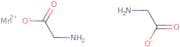
![manganese(2+) bis[(carboxymethyl)azanide]](/_next/image/?url=https%3A%2Fstatic.cymitquimica.com%2Fcas-image%2Fthumb-webp%2F352570-manganese-2-bis-carboxymethyl-azanide.webp&w=3840&q=75)
CAS 14281-77-7
:manganese(2+) bis[(carboxymethyl)azanide]
Description:
Manganese(2+) bis[(carboxymethyl)azanide], also known as manganese bis(2-carboxyethyl)amine, is a coordination compound featuring manganese in a +2 oxidation state. This compound is characterized by its chelating ability, where the carboxymethyl groups serve as ligands that bind to the manganese ion, enhancing its solubility and stability in aqueous solutions. The presence of the amine functional group contributes to its coordination properties, allowing for the formation of stable complexes. Manganese(2+) bis[(carboxymethyl)azanide] is often studied for its potential applications in biochemistry and medicine, particularly in enzyme mimetics and as a potential therapeutic agent due to manganese's role in various biological processes. Additionally, the compound may exhibit antioxidant properties, which can be beneficial in mitigating oxidative stress in biological systems. Its solubility in water and ability to form complexes with other biomolecules make it a subject of interest in research related to metal ion transport and bioavailability.
Formula:C4H8MnN2O4
InChI:InChI=1/2C2H4NO2.Mn/c2*3-1-2(4)5;/h2*3H,1H2,(H,4,5);/q2*-1;+2
SMILES:C(C(=O)O)[NH-].C(C(=O)O)[NH-].[Mn]
Synonyms:- Manganese Glycinate
- Bis(glycinato)manganese
- Manganese chelazome
Sort by
Purity (%)
0
100
|
0
|
50
|
90
|
95
|
100
Found 3 products.
Manganese bisglycinate
CAS:Manganese bisglycinate is a manganese compound that is used as a dietary supplement. It is an activated form of manganese, which means it has been chemically altered to make it more bioavailable. The manganese bisglycinate molecule contains two glycine molecules for each manganese atom. This form of manganese is bound to the amino acid glycine and, therefore, does not bind to other compounds in the gastrointestinal tract. Manganese bisglycinate has shown to be effective in the prevention of tooth decay by increasing bone growth and preventing cavities. It also has antioxidant properties due to its ability to bind with free radicals in the mouth and control oral bacteria emissions. Manganese bisglycinate can be taken orally, but it should not be taken intravenously because it may cause serious side effects.Formula:C4H8MnN2O4Purity:Min. 95%Color and Shape:Red PowderMolecular weight:203.06 g/mol