CAS 14300-45-9
:2,4-DIHYDROXY-6-METHOXYQUINOLINE
Description:
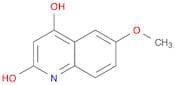
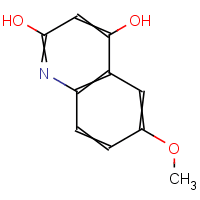
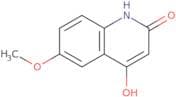
2,4-Dihydroxy-6-methoxyquinoline is an organic compound characterized by its quinoline structure, which features a bicyclic aromatic system. This compound contains two hydroxyl (-OH) groups at the 2 and 4 positions and a methoxy (-OCH3) group at the 6 position, contributing to its unique chemical properties. It is typically a solid at room temperature and may exhibit solubility in polar solvents due to the presence of hydroxyl groups. The compound is of interest in various fields, including medicinal chemistry, where it may exhibit biological activity, such as antimicrobial or antioxidant properties. Its molecular structure allows for potential interactions with biological targets, making it a candidate for further research in drug development. Additionally, the presence of multiple functional groups suggests that it may participate in various chemical reactions, including hydrogen bonding and electrophilic substitution. As with many organic compounds, safety and handling precautions should be observed, as the specific toxicity and environmental impact of 2,4-dihydroxy-6-methoxyquinoline should be assessed in the context of its intended use.
Formula:C10H9NO3
InChI:InChI=1/C10H9NO3/c1-14-6-2-3-8-7(4-6)9(12)5-10(13)11-8/h2-5H,1H3,(H2,11,12,13)
SMILES:COc1ccc2c(c1)c(cc(n2)O)O
Synonyms:- 4-Hydroxy-6-Methoxy-1H-Quinolin-2-One
- Specs Ae-562/12222655
- 2-hydroxy-6-methoxyquinolin-4(1H)-one
Sort by
Purity (%)
0
100
|
0
|
50
|
90
|
95
|
100
Found 4 products.
2(1H)-Quinolinone,4-hydroxy-6-methoxy-
CAS:Formula:C10H9NO3Purity:95%Color and Shape:SolidMolecular weight:191.18342,4-Dihydroxy-6-methoxyquinoline
CAS:2,4-Dihydroxy-6-methoxyquinolinePurity:95%Molecular weight:191.18g/mol2,4-Dihydroxy-6-methoxyquinoline
CAS:2,4-Dihydroxy-6-methoxyquinoline is a compound that exhibits antifungal properties. It has been shown to have activity against Aspergillus flavus, Aspergillus fumigatus, Candida albicans and other fungi. 2,4-Dihydroxy-6-methoxyquinoline also inhibits the growth of E. coli and A. aureus in vitro. Elemental analysis showed that this compound possesses antibacterial properties and can inhibit the growth of Staphylococcus aureus.Formula:C10H9NO3Purity:Min. 95%Color and Shape:PowderMolecular weight:191.18 g/mol