CAS 143601-07-4
:Acuminatin
Description:
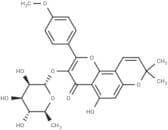
Acuminatin, with the CAS number 143601-07-4, is a naturally occurring compound classified as a flavonoid. It is primarily derived from certain plant sources and is known for its potential biological activities, including antioxidant and anti-inflammatory properties. The structure of acuminatin features a flavone backbone, which is characteristic of many flavonoids, contributing to its ability to interact with various biological systems. Research has indicated that acuminatin may exhibit effects on cellular signaling pathways, potentially influencing processes such as cell proliferation and apoptosis. Additionally, it has been studied for its potential therapeutic applications in various health conditions, although further research is necessary to fully elucidate its mechanisms of action and efficacy. As with many phytochemicals, the bioavailability and metabolism of acuminatin can vary, impacting its overall effectiveness in biological systems. Overall, acuminatin represents a compound of interest in the field of natural products and pharmacology, warranting further investigation into its properties and potential uses.
Formula:C27H28O10
Synonyms:- Acuminatin
- 3-[(6-Deoxy-alpha-L-mannopyranosyl)oxy]-5-hydroxy-2-(4-methoxyphenyl)-8,8-dimethyl-4H,8H-benzo[1,2-b:3,4-b']dipyran-4-one
- 4H,8H-Benzo[1,2-b:3,4-b']dipyran-4-one, 3-[(6-deoxy-α-L-mannopyranosyl)oxy]-5-hydroxy-2-(4-methoxyphenyl)-8,8-dimethyl-
Sort by
Purity (%)
0
100
|
0
|
50
|
90
|
95
|
100
Found 3 products.
Acuminatin
CAS:Acuminatin has a wide range of applications in life science related research.Formula:C27H28O10Purity:98%Color and Shape:SolidMolecular weight:512.51Acuminatin
CAS:Acuminatin is a bioactive compound, which is derived from natural botanical sources. Its mode of action involves modulation of cellular pathways that are critical for maintaining physiological and biochemical homeostasis. This compound has been shown to influence various signaling cascades, potentially offering therapeutic benefits.Formula:C27H28O10Purity:Min. 95%Molecular weight:512.5 g/mol