CAS 14365-45-8
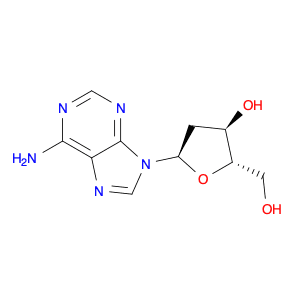
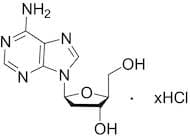
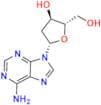
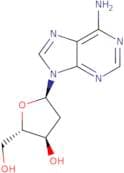
:2'-DEOXY-B-L-ADENOSINE
- 9-(2-deoxy-beta-L-threo-pentofuranosyl)-9H-purin-6-amine
(2S,3R,5R)-5-(6-Amino-9H-purin-9-yl)-2-(hydroxymethyl)tetrahydrofuran-3-ol
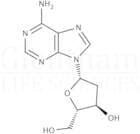
CAS:Formula:C10H13N5O3Purity:98%Color and Shape:SolidMolecular weight:251.24199-(2-Deoxy-β-L-Ribofuranosyl)Adenine
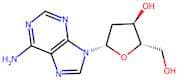
CAS:9-(2-Deoxy-β-L-Ribofuranosyl)AdeninePurity:98%Molecular weight:251.24g/mol2'-Deoxy-beta-L-adenosine
CAS:Controlled ProductApplications A useful synthon for modified oligodeoxyribonucleotides.
References Fujimori, S., et al.: Nucleoside & Nucleotide, 11(2-4), 341 (1992)Formula:C10H13N5O3Color and Shape:NeatMolecular weight:251.242’-Deoxy-β-L-adenosine (May contain up to 20% inorganics)
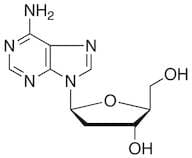
CAS:Controlled ProductFormula:C10H13N5O3Color and Shape:NeatMolecular weight:251.242'-Deoxy-L-adenosine
CAS:2'-Deoxy-L-adenosine is an adenosine analogue that has been shown to inhibit the growth of tumor cells in mice. The mechanism of this inhibition is not well understood, but it is thought that 2'-deoxy-L-adenosine inhibits the adenosine A3 receptor and blocks the activation of toll-like receptors. This drug also has been shown to have anti-inflammatory properties, which may be due to its ability to inhibit prostaglandin synthesis. It has been used as a model system for studying cellular responses to DNA damage caused by ultraviolet radiation. 2'-Deoxy-L-adenosine also has been shown to have a cytotoxic effect on human HL60 cells, which is mediated by nuclear DNA fragmentation.
Formula:C10H13N5O3Purity:Min. 98 Area-%Color and Shape:Off-White PowderMolecular weight:251.25 g/molRef: 3D-ND04246
Discontinued product