CAS 144-62-7
:Oxalic acid
Description:
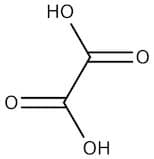
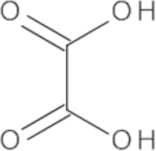
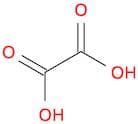
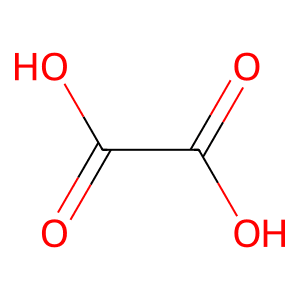
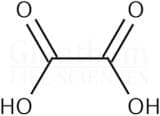
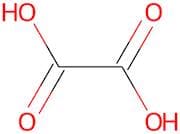
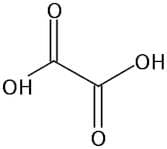
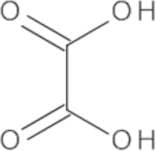
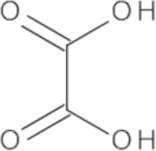
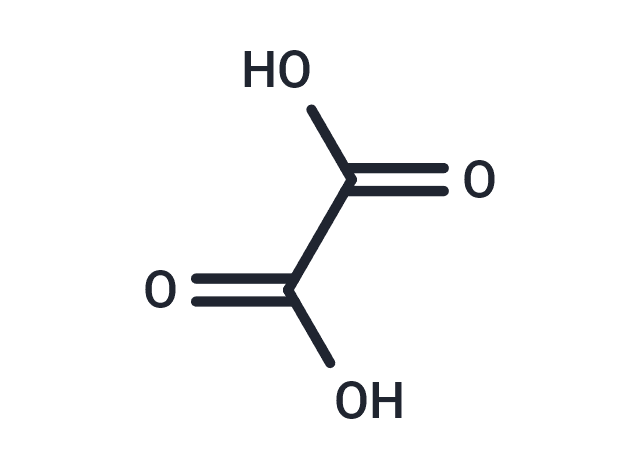
Oxalic acid, with the CAS number 144-62-7, is a colorless, crystalline organic compound that is classified as a dicarboxylic acid. It has a molecular formula of C2H2O4 and is known for its strong acidic properties, being significantly more acidic than many other carboxylic acids. Oxalic acid is highly soluble in water and can form various salts, known as oxalates, when it reacts with bases. It occurs naturally in many plants, including rhubarb and spinach, and is often used in various industrial applications, such as metal cleaning, bleaching, and as a reducing agent in chemical reactions. In addition to its industrial uses, oxalic acid is also utilized in laboratories for analytical purposes. However, it is important to handle oxalic acid with care, as it can be toxic and corrosive, posing health risks upon ingestion or skin contact. Its ability to chelate metal ions makes it valuable in various chemical processes, but safety precautions are essential due to its potential hazards.
Formula:C2H2O4
InChI:InChI=1S/C2H2O4/c3-1(4)2(5)6/h(H,3,4)(H,5,6)
InChI key:InChIKey=MUBZPKHOEPUJKR-UHFFFAOYSA-N
SMILES:C(C(O)=O)(O)=O
Synonyms:- ACIDO OSSALICO (s)
- Acide oxalique
- Acide(S) Oxalique(S)
- Acido Ossalico
- Acido Oxalico
- Aktisal
- Anhydrous Oxalic Acid
- Aquisal
- ÁCido(S) OxáLico(S)
- DeerClean
- Ethanedioate
- Ethanedioic Acid
- Ethanedioic acid, conjugate acid (1:2)
- Ethanedionic acid
- Nsc 132055
- Nsc 151956
- Nsc 62774
- Nsc 76990
- OA
- OXAALZUUR (s)
- OXALSÄURE(n)
- Oxaalzuur
- Oxagel
- Oxalic Acid (Crystal) C.P. (1LB/BT)
- Oxalic acid anhydrous
- Oxalsaeure
- Oxalsaure
- Refined Oxalic Acid
- Ultraplast Activate S 52
- シュウ酸
- See more synonyms
Sort by
Purity (%)
0
100
|
0
|
50
|
90
|
95
|
100
Found 17 products.
Oxalic acid, anhydrous, 98%
CAS:Oxalic acid is used as reducing agent for photographic films, as mordant in dyeing process, as bleaching agent for removal of rust through complex formation, and as grinding agent during polishing of marble. It is used in waste water treatment to remove calcium. The conjugate base of oxalic acid aFormula:C2H2O4Purity:98%Color and Shape:White to pale cream, Crystals or powder or crystalline powderMolecular weight:90.03Oxalic acid, anhydrous
CAS:Formula:C2H2O4Purity:98.0 - 102.0 %Color and Shape:White crystalline powderMolecular weight:90.04Oxalic acid
CAS:Oxalic acid (Ethanedioic acid) is a strong dicarboxylic acid occurring in many plants and vegetables, produced in the body by metabolism of glyoxylic acid.Formula:C2H2O4Purity:98.51% - 99.39%Color and Shape:White Solid CrystallineMolecular weight:90.03Oxalic Acid
CAS:Applications An impurity of oxaliplatin which is a coordination complex that is used in cancer chemotherapy.A reducing agent and its conjugate base, known as oxalate (C2O42−), is a useful chelating agent for metal cations.
References Wheate, N., et al.: Dalton Trans., 39, 8113 (2010),Formula:C2H2O4Color and Shape:White To Off-WhiteMolecular weight:90.03Oxalic acid
CAS:Oxalic acid is an organic compound that is a dicarboxylic acid. It is found in many plants, including the leaves of rhubarb and spinach. Oxalic acid exists in two forms: the anhydrous form (known as calcium oxalate) and the hydrated form (known as calcium oxalate dihydrate). The detection sensitivity of this compound can be increased by using a matrix effect. When light emission is detected, it can be used to detect oxalic acid in a solution. Sodium citrate has been shown to increase the sensitivity of the reaction solution for detecting oxalic acid. This reaction creates a particle with sodium carbonate that can be measured by kinetic data.Formula:C2H2O4Purity:Min. 95%Color and Shape:White Off-White PowderMolecular weight:90.03 g/molRef: 4Z-A-129036
Discontinued product