CymitQuimica logo

CAS 144-79-6

:

Chloro(methyl)diphenylsilane

Description:
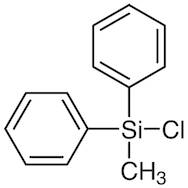
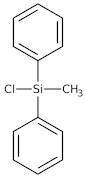
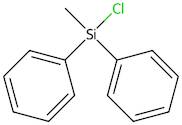
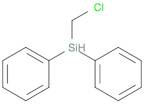
Chloro(methyl)diphenylsilane, with the CAS number 144-79-6, is an organosilicon compound characterized by its silane structure, which includes a silicon atom bonded to two phenyl groups, a methyl group, and a chlorine atom. This compound typically appears as a colorless to pale yellow liquid and is known for its reactivity due to the presence of the chlorine atom, which can participate in various chemical reactions, including nucleophilic substitution. Chloro(methyl)diphenylsilane is often used as a coupling agent in the synthesis of silicone polymers and as a precursor in the preparation of silane-modified materials. Its properties include moderate volatility and solubility in organic solvents, making it useful in various industrial applications. Safety precautions are necessary when handling this compound, as it can be irritating to the skin and eyes, and its vapors may be harmful if inhaled. Proper storage in a cool, dry place away from moisture is also essential to maintain its stability.
Formula:C13H13ClSi
InChI:InChI=1S/C13H13ClSi/c1-15(14,12-8-4-2-5-9-12)13-10-6-3-7-11-13/h2-11H,1H3
InChI key:InChIKey=OJZNZOXALZKPEA-UHFFFAOYSA-N
SMILES:[Si](C)(Cl)(C1=CC=CC=C1)C2=CC=CC=C2
Synonyms:
  • 1,1′-(Chloromethylsilylene)bis[benzene]
  • Benzene, 1,1'-(chloromethylsilylene)bis-
  • Chloro(methyl)diphenylsilane
  • Chlorodiphenylmethylsilane
  • Diphenyl(methyl)chlorosilane
  • Diphenyl(methyl)silyl chloride
  • Methyldiphenylchlorosilane
  • Methyldiphenylsilyl chloride
  • NSC 93961
  • Silane, chloromethyldiphenyl-
  • See more synonyms
Sort by

Purity (%)
0
100
|
0
|
50
|
90
|
95
|
100
Found 5 products.
  • Diphenylmethylchlorosilane

    CAS:
    Formula:C13H13ClSi
    Purity:>95.0%(GC)
    Color and Shape:Colorless to Light yellow to Light orange clear liquid
    Molecular weight:232.78

    Ref: 3B-D1390

    25ml
    133.00€
  • Chloro(methyl)diphenylsilane, 97%

    CAS:
    <p>Chloro(methyl)diphenylsilane is used in agrochemical, pharmaceutical and dyestuff field . This Thermo Scientific Chemicals brand product was originally part of the Alfa Aesar product portfolio. Some documentation and label information may refer to the legacy brand. The original Alfa Aesar product / </p>
    Formula:C13H13ClSi
    Purity:97%
    Color and Shape:Clear colorless, Liquid
    Molecular weight:232.78

    Ref: 02-L04162

    10g
    45.00€
    50g
    116.00€
  • BENZENE, 1,1'-(CHLOROMETHYLSILYLENE)BIS-

    CAS:
    Formula:C13H13ClSi
    Purity:97%
    Color and Shape:Liquid
    Molecular weight:232.7808

    Ref: IN-DA001IQZ

    1g
    24.00€
    5g
    25.00€
    25g
    50.00€
    100g
    116.00€
  • Chloro(methyl)diphenylsilane

    CAS:
    <p>Chloro(methyl)diphenylsilane</p>
    Formula:C13H13ClSi
    Purity:97%
    Color and Shape: clear.almost coulrless liquid
    Molecular weight:232.78g/mol

    Ref: 54-OR80794

    5g
    35.00€
    25g
    57.00€
    100g
    142.00€
    500g
    530.00€
    2.5kg
    2,240.00€
  • DIPHENYLMETHYLCHLOROSILANE

    CAS:
    <p>Phenyl-Containing Blocking Agent<br>Used as a protecting group for reactive hydrogens in alcohols, amines, thiols, and carboxylic acids. Organosilanes are hydrogen-like, can be introduced in high yield, and can be removed under selective conditions. They are stable over a wide range of reaction conditions and can be removed in the presence of other functional groups, including other protecting groups. The tolerance of silylated alcohols to chemical transformations summary is presented in Table 1 of the Silicon-Based Blocking Agents brochure.<br>Aromatic Silane - Conventional Surface Bonding<br>Aliphatic, fluorinated aliphatic or substituted aromatic hydrocarbon substituents are the hydrophobic entities which enable silanes to induce surface hydrophobicity. The organic substitution of the silane must be non-polar. The hydrophobic effect of the organic substitution can be related to the free energy of transfer of hydrocarbon molecules from an aqueous phase to a homogeneous hydrocarbon phase. A successful hydrophobic coating must eliminate or mitigate hydrogen bonding and shield polar surfaces from interaction with water by creating a non-polar interphase. Although silane and silicone derived coatings are in general the most hydrophobic, they maintain a high degree of permeability to water vapor. This allows coatings to breathe and reduce deterioration at the coating interface associated with entrapped water. Since ions are not transported through non-polar silane and silicone coatings, they offer protection to composite structures ranging from pigmented coatings to rebar reinforced concrete. A selection guide for hydrophobic silanes can be found on pages 22-31 of the Hydrophobicity, Hydrophilicity and Silane Surface Modification brochure.<br>Diphenylmethylchlorosilane; Methyldiphenylchlorosilane; Chloro(methyl)diphenylsilane<br>Viscosity: 5.3 cStΔHvap: 623.7 kJ/molSurface tension: 40.0 mN/mVapor pressure, 125 °C: 3 mmThermal conductivity: 0.112 W/m°Cα-Silylates esters, lactones; precursors to silyl enolatesC-Silylates carbamates as shown in the enantioselective example w/ a neryl carbamateStability versus other silyl ethers studiedSummary of selective deprotection conditions is provided in Table 7 through Table 20 of the Silicon-Based Blocking Agents brochure<br></p>
    Formula:C13H13ClSi
    Purity:97%
    Color and Shape:Liquid
    Molecular weight:232.78

    Ref: 3H-SID4552.0

    100g
    To inquire