CAS 144782-23-0
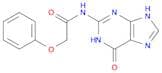
:N2-Phenoxyacetyl Guanine
Description:
N2-Phenoxyacetyl Guanine is a chemical compound that belongs to the class of nucleobase derivatives, specifically a modified form of guanine. It features a phenoxyacetyl group attached to the nitrogen atom at the N2 position of the guanine structure, which can influence its biological activity and solubility. This modification can enhance the compound's interaction with biological targets, making it of interest in medicinal chemistry and drug development. The presence of the phenoxy group may also impart unique physicochemical properties, such as altered lipophilicity and stability. N2-Phenoxyacetyl Guanine may exhibit potential applications in the field of antiviral or anticancer therapies, as modifications to nucleobases can affect their ability to mimic natural substrates or inhibit specific enzymes. Its CAS number, 144782-23-0, serves as a unique identifier for regulatory and research purposes. As with many nucleobase derivatives, understanding its structure-activity relationship is crucial for exploring its potential therapeutic uses.
Formula:C13H11N5O3
InChI:InChI=1/C13H11N5O3/c19-9(6-21-8-4-2-1-3-5-8)16-13-17-11-10(12(20)18-13)14-7-15-11/h1-5,7H,6H2,(H3,14,15,16,17,18,19,20)
SMILES:c1ccc(cc1)OCC(=Nc1nc2c(c(n1)O)nc[nH]2)O
Synonyms:- N-(6,7-Dihydro-6-oxo-1H-purin-2-yl)-2-phenoxy-acetamide
- N-(6-oxo-3,7-dihydropurin-2-yl)-2-phenoxy-acetamide
Sort by
Purity (%)
0
100
|
0
|
50
|
90
|
95
|
100
Found 3 products.
Acetamide, N-(6,9-dihydro-6-oxo-1H-purin-2-yl)-2-phenoxy-
CAS:Formula:C13H11N5O3Color and Shape:SolidMolecular weight:285.2581N2-Phenoxyacetyl guanine
CAS:N2-Phenoxyacetyl guanine is a labile nucleoside that can be synthesized by the aminoacylation of guanosine with phenoxyacetic acid. It has been shown to have an important role in oxidative DNA damage, which may lead to mutagenesis and cancer. N2-Phenoxyacetyl guanine is stereoselective and binds preferentially to the GGC sequence, and it is also aminopropylated at its 2′ position. This nucleoside is not ionizing but can be degraded by radiation or enzymes such as deaminases.Formula:C13H11N5O3Purity:Min. 95%Molecular weight:285.26 g/mol